
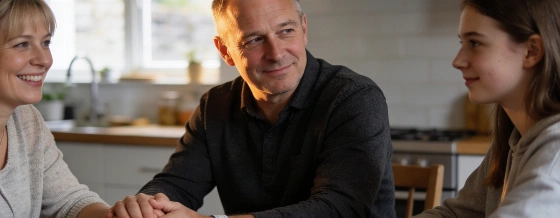
Adam Nicolson was once told he might not live to see the end of the year. Now, he is in remission—evidence that CAR-T cell therapy can work when nothing else has.
Since 2019, more than 130 blood cancer patients have received licensed CAR-T therapy at Queen Elizabeth University Hospital in Glasgow.
“When I was offered CAR-T therapy, it felt like a lifeline,” Adam said. “Every treatment seemed to work for a while, then the myeloma would come back and each time it returned, it felt harder than the last for me and my whole family. There was a point when my consultant sat me down to say I might not see out the year. My body was failing and we had run out of options.”
CAR-T, or Chimeric Antigen Receptor T-cell therapy, is a type of personalized medicine that uses a patient’s own immune cells to target cancer. Doctors extract T cells, modify them in a lab, and infuse them back into the patient. These cells then multiply and attack cancer cells. According to a Glasgow Times report, Adam was the first to receive CAR-T for myeloma at the hospital.
“But then the CAR-T clinical trial was offered, giving me hope when I really needed it. Then to be told I was in remission was incredible. The treatment has given me a second chance at life. It hasn’t repaired all the damage caused by cancer but it has given me a quality of life I could only have dreamed of,” Adam said. “It’s allowed me to spend more time with my family, make plans for the future and get back to doing the things I enjoy.”
A new phase 3 clinical trial, DURGA-4 (NCT07391657), is now recruiting in the UK and internationally to test a dual-targeted CAR-T therapy (AZD0120) against both BCMA and CD19 in patients with relapsed or refractory multiple myeloma, comparing it to standard regimens.
Autoimmune diseases, where the immune system attacks healthy tissue, often cause chronic pain, inflammation, and organ damage. Researchers at NHSGGC are now working across haematology, rheumatology, and nephrology to see if CAR-T can remove the immune cells that drive these conditions. Early studies in lupus and other autoimmune disorders have shown some patients can achieve long-term remission and reduce their need for medication. International teams are also looking at CAR-T for systemic sclerosis and idiopathic inflammatory myopathies.
Dr Irvine described the approach as an “immune reset,” targeting abnormal B cells that cause inflammation. “CAR-T therapy can target and remove those cells much more thoroughly than existing treatments,” he said. “The possibility that CAR-T could deliver long-term remission with a single treatment is hugely exciting. While more research is needed and there are still important questions to answer, the early results suggest this could eventually become a new way of treating some of these conditions. Our aim is to ensure patients in Scotland have access to these innovations as the evidence continues to develop.”
For Adam, the change is immediate and personal. “If what happened to me can help researchers find new ways to treat other serious illnesses, that's a wonderful thing. CAR-T has already changed my life. Hopefully it can do the same for many more people in the future. I feel incredibly fortunate to have been offered this new type of treatment, and my thanks go to all of the clinicians who have cared for me.”
Adam Nicolson’s remission shows how cell therapy is moving forward. As Scottish clinicians and researchers test CAR-T in new areas, Adam’s case highlights the need to speed up access to advanced therapies for patients who have run out of standard options. The next steps for CAR-T may reach beyond cancer wards, offering hope for people with autoimmune diseases who have few other choices.