
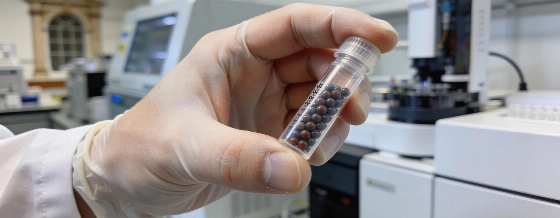
Detachable activation beads made to GMP standards are now essential for cell therapy manufacturing in Ireland. Yet, almost all of these beads are imported. Around 90–100% come from suppliers in continental Europe, the UK, or North America. This leaves Irish manufacturers exposed to freight delays, customs checks, and currency swings, all of which add cost and complexity.
Most beads are used for clinical trial material, which accounts for an estimated 60–75% of demand. As more Irish cell therapy programs move toward commercial production, the share of beads used in large-scale GMP manufacturing is expected to grow—possibly reaching 30–50% by 2035. This shift is already underway. Investment in research and manufacturing, especially around Dublin and Cork, is driving steady annual increases in bead demand from both research and clinical-stage projects. RTÉ News reports that Ireland’s cell therapy manufacturing is still concentrated in established biopharma hubs like Dublin, Cork, and the mid-west. Multinational companies continue to expand their manufacturing presence, but there is little domestic production of upstream raw materials.
"A recent peer-reviewed clinical study found that bead production is a distinct manufacturing step that must be completed before T-cell immunotherapy manufacture can begin."
PLOS ONE
Anti-CD3/CD28 beads make up most of the Irish market, estimated at 70–85% of use. Newer co-stimulatory beads, such as those targeting CD137, are gaining ground as next-generation therapies develop. The fastest-growing segment is allogeneic off-the-shelf cell therapy, where bead demand could rise by 15–20% each year as manufacturing scales up.
Prices for GMP-grade beads in Ireland vary widely. Beads with full regulatory documentation, sterility checks, and batch-specific quality data cost more, and import dependence only adds to these expenses. The market is shaped by the technical standards, regulatory paperwork, and supply reliability of international suppliers, not by local competition. RTÉ News notes that Astellas Ireland plans to expand its Tralee facility at Kerry Technology Park, aiming to double drug-product manufacturing capacity and add new jobs in engineering, production, quality, logistics, and support by 2029. This expansion will support more products from the company’s pipeline as they move toward commercial launch, linking Ireland’s growing biomanufacturing capacity to rising demand for advanced process inputs.
Although small, Ireland’s market for detachable activation beads is a key part of the European cell therapy supply chain. The regulatory environment closely follows EU rules, requiring strict quality documentation and compliance for GMP-grade products. Available products include beads for ex vivo T cell activation and expansion, covering anti-CD3/CD28 and other co-stimulatory molecules, with uses in autologous, allogeneic, and TIL therapies. Ireland’s reliance on imports for specialized inputs matches a broader pattern in its life sciences sector: the country is mainly a base for manufacturing, logistics, and distribution, not for producing upstream consumables.
"A recent clinical study published in PLOS ONE describes a first-in-human phase I/IIa T-cell immunotherapy process using recombinantly produced proteins attached to paramagnetic EpiTCer micro-particles. The study highlights that manufacturing of the pTTL therapy takes approximately two weeks, illustrating how bead-linked upstream inputs are a time-critical dependency in personalized cell therapy workflows."
PLOS ONE, Journal
Market forecasts suggest low double-digit annual growth through 2035, with value rising faster than volume as higher-value GMP-grade products take a larger share. Still, Ireland’s near-total dependence on imports is unlikely to change soon. For manufacturers, distributors, investors, and procurement teams, the Irish market offers both growth and risk: demand is real, but so are the challenges of supply chain fragility and rising costs. As Ireland’s cell and gene therapy sector expands, its reliance on international bead suppliers will remain a strategic weak point—and a test of how well it can secure the materials needed for future therapies.