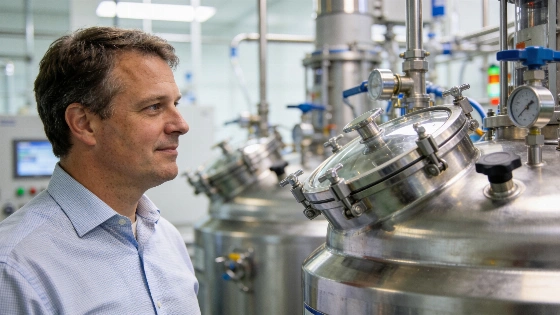
On October 8, 2026, Penn Medicine announced a $25 million gift from the Smilow Foundation to establish the Smilow Center for Precision Therapeutics in Philadelphia. The center will be led by Thomas P. Cappola, MD, William Smilow Professor and chief of Penn Medicine’s Division of Cardiovascular Medicine. Cardiologists and physiologists will work alongside pharmacology specialists. The center will also draw on bioengineering, with radiology as part of the effort. Its program will develop gene-editing and other precision therapies aimed at the biological causes of cardiovascular disease. Some approaches are intended to lower cholesterol. The work also aims to reduce the risk of heart attack and stroke. Plans span research and first-in-human studies, with clinical application to follow. The gift continues the foundation’s support for Penn Medicine, including the Smilow Center for Translational Research and an endowed professorship established in 2012. Penn Medicine’s announcement was reported by Becker’s Hospital Review.
A federal designation and a major suburban expansion put manufacturing capacity at the center of Greater Philadelphia’s life sciences news this week. The regional effort is designed to help young companies get production-ready locally. That could keep manufacturing activity and related jobs in the area as companies grow.
One of the world’s largest biopharma companies announced a major expansion in the Philadelphia suburbs. Its plan brings manufacturing and R&D together at one site, alongside quality operations. It includes new jobs and a commitment to current employees.
A Tokyo biotech has chosen Philadelphia for its first move outside Japan. At a local innovation hub, it plans to work with regional developers and manufacturers on technology intended to keep cells healthier and more consistent as they grow. That remains a challenge when scaling cell therapies.
The manufacturing push connects with wider interest in cell-therapy infrastructure. In a completed purchase of BioLife Solutions, Repligen acquired a portfolio of cell-processing tools and biopreservation media. The cell-therapy acquisition added those products to Repligen’s business.
Capital and commercial moves
Agilent Technologies announced on October 14, 2026, an agreement to acquire Philadelphia-based digital pathology software company Proscia. The deal provides for $240 million in cash at closing, with up to $30 million in additional payments tied to future performance milestones. That puts the maximum stated value at $270 million. Proscia’s platform brings slide scanners together with laboratory information systems. It also connects image-analysis applications and AI tools, along with staff and data, in a shared workflow. Organizations using the technology include Johns Hopkins. The University of Pennsylvania has used it as well, as has the Joint Pathology Center. After closing, Proscia is expected to join Agilent’s Life Sciences and Diagnostics Markets Group and form the basis of a new digital pathology business. Closing is expected at the beginning of Agilent’s fiscal 2027, subject to customary conditions. The agreement was outlined by G-MedTech.
A separate philanthropic agreement creates a grantmaking arm for nonprofit programs serving children and families. It also continues support for a leading children’s health system.
On the clinical side, a Wilmington oncology company will test an early-stage breast cancer drug alongside established treatments in a collaboration with a global pharma company. The Wilmington company retains full rights to its drug.
A Malvern medtech company has cleared an FDA hurdle for a surgical implant designed and built by its own team. The implant is intended to give surgeons another option for reinforcing soft tissue.
Researchers have developed an AI-powered platform that lets patients ask questions about medical devices through a smartphone app. Patients can also report symptoms and receive feedback. Early findings come from a small proof-of-concept study. The team sees potential applications beyond the condition it first studied.
Leadership and workforce
A Plymouth Meeting rare disease company has chosen its next CEO from its board. The incoming leader has experience at a large pharmaceutical company and an early-stage biotech. The transition takes effect at the start of the new year.
Minaris Advanced Testing promoted Athenesia Faggins, Ph.D., to Director of Quality Assurance and Regulatory Compliance. She has nearly two decades of cell and gene therapy experience. Her career has taken her through regional companies, from the lab bench to director-level work.
Levi Gray-Rupp, Ph.D., joined AstraZeneca as Global Product Leader, Solid Tumor Cell Therapy, in Gaithersburg, Maryland. He brings more than a decade in CAR-T discovery and early development. His work included taking a solid tumor CAR-T program from concept into the clinic.
A 2026 national health technology recognition list includes leaders from three BioBuzz regions. Their careers span clinical work and engineering. They have also worked in data and partnerships.
Two researchers at the same Philadelphia university received federal awards for unconventional ideas. One project examines links between home design and health. The other explores building tissues from cells to improve disease modeling and treatment.
A Philadelphia university is introducing AI-focused study options for health and life sciences. It will also offer data-focused programs, from degrees to short certificates. The programs target recent graduates and career changers. Working professionals are also among the intended students.
Applications are open for a 2027 fellowship for scientists and engineers seeking to bring lab-built technology into the world. The fellowship offers funding. It also provides mentorship and a founder community. Applications close at the end of October.
A free entrepreneurship program pairs scientists and early-career professionals from different backgrounds for team-based training. Founders and investors provide mentorship. Applications are due soon.
Founded in Dublin in 1990 with a team of five, ICON now employs almost 40,000 people across 80 locations in more than 40 countries. The contract research organization is hiring for more than 300 roles in Greater Philadelphia. Openings span clinical operations and trial delivery, among other areas.
Sanofi is hiring a Strategic Account Manager in Philadelphia. Madrigal Pharmaceuticals has an opening for an Associate Director Drug Product SME in Conshohocken. Johnson & Johnson is seeking an Associate Director, Customer Experience, Immunology, in Horsham. Immunocore in Randor is looking for a Director Safety Physician, Global Safety Lead. GSK is hiring a Global Marketing Manager, Oncology, in Philadelphia.
Regional ecosystem and upcoming events
A Philadelphia organization has been selected by the federal government to lead a Mid-Atlantic effort with partners across several states. The initiative aims to help young companies prepare products for manufacturing in the United States. It is also intended to keep production and jobs in the region.
Other selected reads look at how Greater Philadelphia might retain more financial value from biomedical discoveries, using the coffee trade as a comparison. Another examines how sponsors and contract manufacturers can align on timelines and intellectual property. A third considers what a personalized gene-editing treatment developed in months for an infant at a Philadelphia hospital may mean for the field. That article draws on experts from Brazil. They discuss newer editing tools, then turn to remaining barriers and considerations for families and clinicians.
Vendor Night is scheduled for October 15 in Malvern from 5 to 8 PM, hosted by the Delaware Valley Chapter. Pennovation Works hosts Founders Alley: Our City in Motion in Philadelphia on October 20 from 9 AM to 7 PM. BioPharmaSpec Inc. Open Day follows in Malvern on October 22 from 4 to 7 PM.