
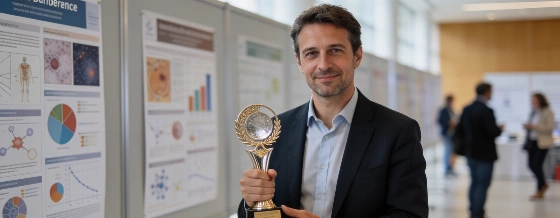
Andrew Dauber, MD, MMSc, was awarded the ESPE International Research Award at the 64th annual European Society for Paediatric Endocrinology meeting in Marseille, France. The award recognizes researchers whose work has made a sustained impact on pediatric endocrinology or basic endocrine science, according to the European Society for Paediatric Endocrinology.
As of mid-September 2026, Children’s National’s Diabetes and Endocrinology program was ranked 7th in the United States by U.S. News & World Report, highlighting the institution’s national leadership at the time of Dauber’s recognition.
At the Marseille meeting, Dauber presented results from a Phase 3 multicenter study published in NEJM Evidence. The study showed that vosoritide increases growth in children with hypochondroplasia, a rare skeletal disorder with limited treatment options. In the trial, vosoritide led to a statistically significant improvement in annual growth velocity compared to placebo, with a difference of 2.33 cm/year (95% CI 1.85–2.82, p<0.0001), as reported in the NEJM Evidence publication. The study included 81 children aged 3 to under 18 years. After 52 weeks, the mean annualized growth velocity was +1.95 cm/year in the vosoritide group and −0.39 cm/year in the placebo group.
BioMarin, the company that developed vosoritide (marketed as VOXZOGO), confirmed in an official statement that the positive Phase 3 results in hypochondroplasia came from the CANOPY-HCH-3 trial, with Dauber as principal investigator. The results were published in NEJM Evidence and presented at ESPE 2026.
BioMarin’s official statement on the VOXZOGO program highlighted the CANOPY-HCH-3 trial’s positive Phase 3 results in hypochondroplasia and acknowledged Andrew Dauber as principal investigator. The company emphasized the importance of these findings for advancing treatment options for rare genetic growth disorders.
Children’s National’s Endocrinology and Diabetes program, ranked among the top 10 in the United States by U.S. News & World Report, continues to be recognized for clinical and research work in pediatric endocrinology. Dauber’s recognition at ESPE reflects the growing role of precision medicine and genomics in treating childhood growth disorders. The field is moving toward evidence-based, genetically informed therapies, with research like Dauber’s helping to bring new treatments to patients.