
Single CRISPR infusion cuts stubborn LDL cholesterol for a year
A single dose of CTX310, a CRISPR-Cas9 therapy, dropped LDL cholesterol by more than half in patients who did not respond to standard drugs. The effect lasted at least a year.
A single dose of CTX310, a CRISPR-Cas9 therapy, dropped LDL cholesterol by more than half in patients who did not respond to standard drugs. The effect lasted at least a year.
Precure LLC has picked Helix to handle clinical whole genome and multiomics data from a million biospecimens. This marks a major step for precision medicine at Mayo Clinic and could reshape care across health systems.
A breakthrough in hornbill genomics offers scientists new tools to trace species history and guide conservation of four threatened Asian hornbills.
Uzbekistan is moving ahead with a Biome center dedicated to cell technologies, genomics, and biobanking, aiming to strengthen its position in advanced bioscience research.
Researchers at Sidra Medicine have created a genomic method that combines genetic and brain imaging data to improve early prediction of cognitive decline, paving the way for more tailored brain health strategies.
MDU's Centre for Biotechnology brought leading scientists to campus to dissect how gene editing tools like CRISPR-Cas9 are reshaping malaria research and student training.
Researchers at ICAR-Central Rice Research Institute have shown that Plant OpenCRISPR-1, an AI-designed genome editor, works as well as established systems for editing rice genes.
British Ambassador Simon Walters is working to connect Israel with the Oxford-Cambridge Growth Corridor, aiming to build new partnerships in genomics, agri-tech, AI, and clean tech, even as political disagreements continue.
Artificial intelligence has crossed a threshold in biotechnology by designing functional viruses that target bacteria, opening vast opportunities and urgent responsibilities for India and the world.
A coalition of scientists and farmers is urging the Indian government to stop gene edited rice, warning of health, environmental, and economic risks, and calling for a return to Dr Richharia’s sustainable approach to agriculture.
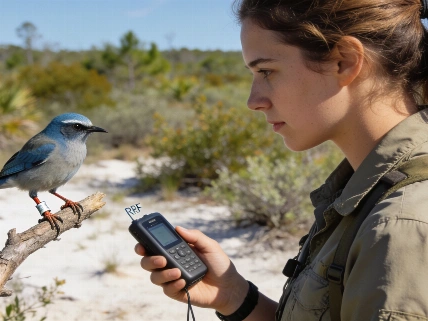
A bold genetic rescue experiment led by UCF biologist Lauren Deaner has triggered unprecedented early breeding among translocated Florida scrub-jays, offering new hope for species recovery.
Andrew Dauber, chief of Endocrinology at Children’s National, received the ESPE International Research Award in Marseille for his work on genetic growth disorders and precision medicine.
OpenAI claims a breakthrough on a Millennium Prize problem as billions flow into AI and researchers warn about the risks of runaway systems. Genomics projects show AI’s potential for medicine, even as the industry faces tough questions about safety and oversight.
BioCytics has brought in Eremid Genomic Services to run advanced single-cell transcriptomic and TCR sequencing on immune cells, aiming to speed up development of its autologous adaptive immune cell therapy for solid tumors.
LSUA has broken new ground with the first accredited 90 credit hour accelerated bachelor's degrees in bioinformatics and information technology, offering students a faster and more focused route into high-demand STEM fields.