The 17 patients had treatment-refractory advanced solid tumors and had received between two and 11 prior lines of systemic therapy. They received APN401 at three dose levels. On October 15, 2026, Austrian biotech company invIOs GmbH announced that the findings had been published in the peer-reviewed journal Molecular Therapy Oncology, in an APN401 clinical data update.
Five of the 10 patients evaluable under RECIST had stable disease.
The early results offer a clinical signal, not proof of efficacy. The studies had no comparator. Researchers did not report how long disease stabilization lasted. Only 10 of the 17 treated patients were evaluable under RECIST, leaving a wide gap between the observed result and evidence of tumor control.
Safety and dose selection
Across three dose levels, investigators reported no dose-limiting toxicities. They also reported no cytokine release syndrome or immune effector cell-associated neurotoxicity syndrome. No treatment-related adverse events of grade 3 or higher were reported. The highest tested dose, 4.5 × 10⁷ PBMCs/kg, was selected as the recommended Phase 2 dose.
That selection gives further study a dose to test; it does not show that APN401 controls tumors. invIOs identified Phase 2 evaluation at the recommended dose as the next step in the clinical development program.
How APN401 works
APN401 is an autologous cell therapy made from a patient’s own peripheral blood mononuclear cells, or PBMCs. It uses small interfering RNA, or siRNA, to temporarily silence CBL-B. This intracellular immune checkpoint negatively regulates antigen receptor signaling and T-cell activation. The approach aims to reduce that restraint, but the Phase 1 findings do not establish that CBL-B silencing caused the observed disease stabilization.
Exploratory immune profiling found systemic changes after treatment. These included higher levels of cytotoxic mediators and expansion of specific T-cell populations. The changes were most pronounced among patients with stable disease, but that association does not show that the immune response produced clinical benefit.
Manufacturing is part of the approach
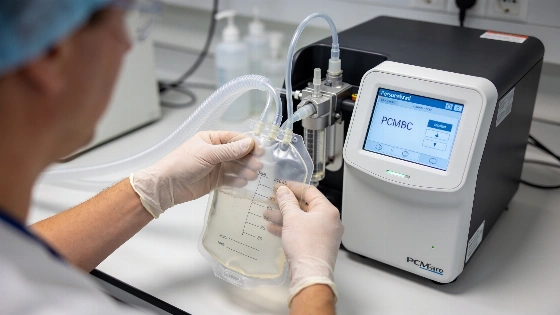
invIOs says its EPiC point-of-care platform produced APN401 at decentralized manufacturing sites, with a vein-to-vein time of less than 24 hours. The studies also supported the feasibility of repeated administration. Those operational findings matter for a personalized therapy made from each patient’s cells, though they do not answer whether the treatment benefits patients.
The evidence differs from a regulatory milestone such as the MT027 clearance report. APN401’s publication describes treated patients and clinical observations, while the small Phase 1 dataset leaves its therapeutic benefit uncertain. invIOs said the results support further clinical evaluation of APN401 and its EPiC platform.