
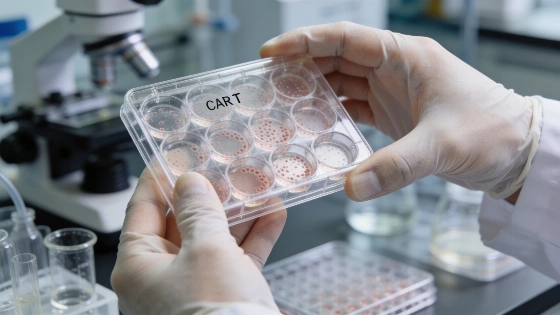
CAR T cell therapy has changed the game for blood cancers, but its results against solid tumors have lagged. Jessica Morgan, Sarah MacPherson, and Julian J. Lum from the Trev and Joyce Deeley Research Centre and BC Cancer Research Institute now say the real breakthrough may come from a different angle: metabolism. Their review in Nature Reviews Cancer lays out how the way CAR T cells use energy—shaped by lab choices and even the patient’s diet—can decide whether these cells stick around and do their job inside the body.
The review pulls together a wide range of studies showing that metabolism isn’t just a background detail. It’s the main lever for making CAR T cells work, especially in the tough environment of solid tumors where most therapies have failed to move the needle.
Recent research highlights that the tumor microenvironment's metabolic signals and metabolites can significantly influence the effectiveness of cell-based immunotherapies for solid tumors.
Metabolic fate set in the lab
Every CAR T cell’s metabolic style starts with its co-stimulatory domain. The classic split—CD28 versus 4-1BB—shows how this works. CD28 pushes cells to burn sugar fast and attack quickly, but they burn out early. 4-1BB, on the other hand, builds up mitochondria and helps cells last longer, acting more like memory cells. This isn’t just theory. A 2025 Cell Reports study found that patients treated with axicabtagene ciloleucel and tisagenlecleucel still show these metabolic fingerprints in their blood years after treatment.
The review maps out other domains too, like CD27 and OX40, each with its own metabolic twist. CD27 ramps up both glycolysis and the TCA cycle, helping third-generation CAR T cells make more building blocks for growth. OX40, working with phosphoinositide 3-kinase, keeps T cells alive and dividing, even when they keep running into tumor antigens. The takeaway: by picking and mixing these domains, scientists can tune a cell’s energy use to fit the tumor they’re fighting.
Inside the tumor: a metabolic minefield
Even the best-engineered CAR T cell faces a tough road inside a tumor. Tumor cells grab most of the glucose, starving immune cells. They also build up lactate, adenosine, and oncometabolites like 2-hydroxyglutarate and fumarate, all of which can shut down T cell function. Low oxygen and scarce nutrients wear down mitochondria. The review lists new ways to fight back: boosting glucose uptake by adding GLUT1 or GLUT3, engineering cells to use fructose through GLUT5, or even giving them a fungal cellobiose pathway for extra fuel. Tweaking amino acid metabolism helps too—adding glutamine and arginine transporters can keep CAR T cells growing in hostile tumors. Some teams are working to neutralize toxic metabolites by overexpressing D-2-hydroxyglutarate dehydrogenase or blocking adenosine signals. Even lactate, once seen as pure poison, is getting a second look: blocking lactate dehydrogenase along with interleukin-21 can push cells into a stem-like state that improves results.
This marks a shift. Instead of seeing metabolism as a limit, researchers now treat it as something they can engineer. As a recent PubMed Central review explains, some labs are even testing probiotic-guided CAR-T cells to change the tumor environment and boost cell function, though these ideas are still in early stages.
Despite ongoing research into metabolic engineering of CAR-T cells, there is currently no FDA-approved CAR-T therapy specifically designed for solid tumors using metabolic modifications. Most regulatory approvals for cell therapies in solid tumors have focused on tumor-infiltrating lymphocyte (TIL) therapies rather than CAR-T.
Manufacturing and diet: new levers for cell fitness
The review doesn’t stop at cell design. How CAR T cells are grown in the lab—what’s in the culture medium, which cytokines are used, and how long they’re expanded—can leave a lasting mark on their metabolism and function. Five different expansion media can set off very different metabolic programs, sometimes without changing how the cells actually work. Cutting down the time cells spend in culture and using human plasma-like medium can make them more active against leukemia. Cytokine choices matter too: interleukin-7 and interleukin-15 push cells toward memory types that fight cancer better, while low interleukin-2 levels favor early memory cells. But there’s no standard recipe yet, so two patients might get CAR T cells with very different metabolic fitness, even if the therapy looks the same on paper.
Drugs added during manufacturing—like PI3K or AKT inhibitors, rapamycin, or GCN2 pathway activators—can help keep cells in a stem-like, resilient state. Changing amino acid levels, such as limiting asparagine or tweaking methionine, can also tune cell metabolism through stress pathways. The review points out that these levers aren’t just for the lab. In theory, they could be used after infusion by changing the patient’s own metabolism.
One of the boldest ideas is using diet to shape CAR T cell outcomes. Poor nutrition and cachexia are linked to worse results, and body mass index has a complicated relationship with response in myeloma. Some diets—like adding beta-hydroxybutyrate, cutting carbs, or using fasting-mimicking plans—have shown promise in animal studies and are now being tested in people. Methionine restriction, already under study for cancer, might help prevent T cell exhaustion. Still, the review warns that diet is a double-edged sword: ketone metabolism can sometimes help cancer grow, and starving both tumor and immune cells can backfire. Timing and matching the diet to the tumor type are key.
Metabolism, once an afterthought in cell therapy, is now at the center of the field. Morgan, MacPherson, and Lum make the case that metabolic engineering—applied from the lab bench to the patient’s bedside—could finally make CAR T cell therapy work for more people. The next big advances may not come from chasing new antigens, but from cracking the metabolic code that controls how these cells live and fight.