
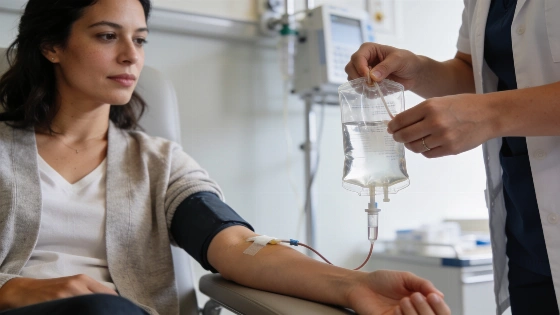
Artiva Biotherapeutics is getting ready to shake up autoimmune cell therapy. The company will bring new clinical results for its AlloNK (AB-101) program to the American College of Rheumatology (ACR) Convergence 2026. Artiva says its allogeneic, non-genetically modified NK cell therapy, when used with rituximab, can wipe out B cells as well as autologous CAR T-cell treatments. There’s a key difference. AlloNK skips the complex logistics and safety risks that have kept cell therapies locked inside major academic hospitals.
Patients with refractory rheumatoid arthritis (RA) and other stubborn rheumatologic diseases have few options. Artiva is aiming for a fix: a scalable, outpatient treatment that could finally bring deep B-cell depletion to local clinics. The company’s upcoming oral presentation will cover results in 34 patients. At least 20 had RA, 11 had Sjögren disease, and at least 5 had systemic sclerosis. All were tracked for at least six months. A separate poster will show safety and B-cell depletion data in a 60-patient group. Another poster will break down real-world unmet need and response rates in RA patients who failed two or more classes of biologic or targeted synthetic DMARDs.
By July 2026, Artiva had enrolled a total of 73 patients across its basket trial for multiple autoimmune diseases, with safety and B-cell depletion data reported for 60 of them.
How AlloNK works and what the data show
AlloNK uses cryopreserved, off-the-shelf NK cells. These cells are designed to boost antibody-dependent cellular cytotoxicity when given with drugs like rituximab. Unlike CAR T-cell therapies, these NK cells are not genetically engineered. That makes manufacturing simpler and may lower risk. The planned phase 3 regimen starts with low-dose cyclophosphamide and fludarabine. Then, patients get two infusions of 4 billion AlloNK cells on days 6 and 20. Each infusion is paired with rituximab. The details are in the official company press release.
The October 2 announcement did not include new efficacy numbers. But earlier data from May 2026 showed all 51 treated patients had complete B-cell depletion by day 13. In the phase 2a group, five of seven RA patients with six months of follow-up reached an ACR50 response. No cases of cytokine release syndrome or immune effector cell-associated neurotoxicity syndrome were reported. Only 2% had grade 3 or higher infections. Guillermo J. Valenzuela, MD, FACR, medical director at Integral Rheumatology & Immunology Specialists, pointed to the strong safety profile. He said this supports use in community clinics.
Positioning AlloNK in the autoimmune cell therapy landscape
Rheumatoid arthritis is tough. The immune system attacks joint tissue, and many patients go through several therapies without lasting relief. Deep B-cell depletion is a promising approach. Both autologous and allogeneic CAR T-cell therapies are being studied. But as Anna Catalanotto of Cardinal Health explained in a reported earlier, most cell and gene therapies are still only available at large academic centers. That leaves many patients out.
Artiva’s method is different. Off-the-shelf, non-genetically modified NK cells can be given in outpatient clinics. This could close the access gap. The company plans a single randomized phase 3 trial. It will compare AlloNK plus rituximab to rituximab alone in about 150 patients with refractory RA who have failed at least two b/tsDMARD classes. The main goal is ACR50 response at six months. The trial should start in the second half of 2026. Primary efficacy data are expected in the second half of 2028. An industry analysis by BioPharm International says this phase 3 trial is set to begin after the ACR 2026 data presentations.
In a summary of company data, it was reported that 71% of refractory RA patients achieved an ACR50 response at six months, with no relapses and no need for new immunomodulatory drugs during the follow-up period.
Autoimmune cell therapy is changing fast. Artiva is betting on scale and community delivery. If the phase 3 trial backs up the early signs of efficacy and safety, AlloNK could set a new standard for B-cell depletion in refractory RA. This would move advanced cell therapy out of the ivory tower. Local rheumatologists could use it. The industry is watching. Artiva wants to bridge the gap between new science and real-world access. That could shake up the field for autoimmune disease treatment.