
Doctors treating acute promyelocytic leukemia (APL) have relied on all-trans retinoic acid (ATRA) and arsenic trioxide (ATO) to save lives. But one threat keeps coming back: differentiation syndrome. Now, a team in Italy has found a simple warning sign. The number of red blood cell transfusions may reveal which patients are in danger.
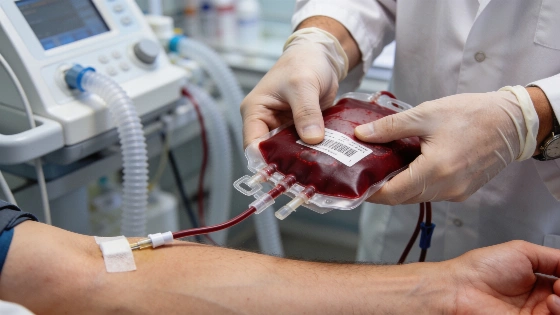
The research, published in the Annals of Hematology, comes from Giulia Falconi, Luca Guarnera, and Maria Teresa Voso at the University of Rome Tor Vergata, working with other Italian centers. They looked at two groups: 34 real-world patients and 18 from the APL0406 trial. Patients who developed differentiation syndrome needed a median of nine units of red blood cells during induction. Those who did not develop the syndrome needed only three. This link stayed strong even after accounting for other clinical factors.
The Annals of Hematology published this research on September 2, 2026, highlighting the ongoing scientific focus on differentiation syndrome in APL therapy.
What happens inside the body
Differentiation syndrome is triggered by the same drugs that cure APL. It causes fever, fluid in the lungs, low blood pressure, and kidney failure. The biology behind it has been a mystery. This study offers new clues. RNA sequencing of patient blood showed 93 genes with different activity in those who developed the syndrome. Many of these genes are tied to how red blood cells mature. The drugs that force leukemia cells to grow up may also disrupt normal red cell development. This can drive up transfusion needs and set off a dangerous chain reaction.
Inflammation plays a role too. Patients with differentiation syndrome had higher levels of interleukin-6, a cytokine known for causing widespread inflammation and trouble in other cancer treatments. The body, already struggling with abnormal blood cell growth, becomes primed for an inflammatory storm.
Damage to blood vessels—and a way to fight back
The team also studied what happens to blood vessels. In the lab, they exposed human lung microvascular endothelial cells to ATRA and ATO. The cells became leaky. Fluid could pass through the vessel wall. This matches what happens in patients: fluid floods the lungs and organs. But when they added dexamethasone, a steroid already used to treat differentiation syndrome, the vessel barrier held firm. This explains why steroids help. They protect the vessel lining from drug damage. The lab model could help test new protective drugs.
Despite the significance of these findings, no independent regulatory decisions or clinical guideline changes have been reported following the publication of this study. The only official confirmation remains the journal record listing the article and its authors.
The findings point to a three-step process. First, ATRA and ATO disrupt red cell maturation, causing anemia and more transfusions. Second, the drugs damage the endothelium, leading to capillary leak. Third, interleukin-6 levels surge, fueling inflammation. The need for more transfusions becomes an early, visible warning.
What this means for patients
Doctors already track red blood cell transfusions for every APL patient. This makes transfusion count a practical marker. Patients who need frequent transfusions during induction could get closer monitoring, earlier steroids, or be included in studies of prevention. The authors warn that their results come from just 52 patients. Larger studies are needed before transfusion burden can be used to guide risk in every case.
This approach is different from gene-editing strategies in other blood cancers. For example, the recent use of CRISPR-modified donor cells aims to shield healthy blood from targeted therapy. Here, the focus is on reading the body's own warning signs as they appear.
APL used to mean rapid death. Now, doctors can spot and stop its most dangerous complication using a number already in the chart. The message is clear. Transfusion burden is not just a logistical detail. It is a clinical alarm. Until bigger studies confirm these results, doctors should watch this metric closely. Sometimes, the most important clues are right in front of us.