
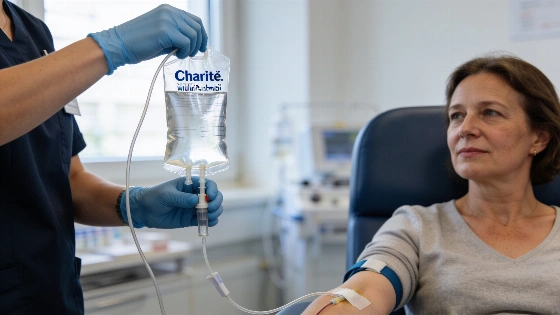
Three people with severe rheumatoid arthritis have stopped all medication after just one CAR T cell infusion at Charité - Universitätsmedizin Berlin. Their disease went quiet. This is the first trial of its kind. The results, published in Nature Medicine, offer hope for patients who have run out of options.
These patients had spent years on anti-inflammatory and immunosuppressive drugs. Nothing worked. The trial brought in six participants, ages 31 to 69. Each had failed targeted or biologic therapies for over a decade. Could a cancer treatment reset their immune system and stop the attack on their joints?
According to a clinical report from Germany, all six participants in the phase 1 trial experienced improvement after a single CAR T cell infusion, and three achieved drug-free remission.
CAR T cell therapy is known for fighting blood cancers. It works by reprogramming a patient’s own T cells to hunt cells with a specific marker. In this trial, the target was CD19. CD19 sits on B cells, which drive some cancers and also fuel the autoimmune response in rheumatoid arthritis. The scientists gave T cells a chimeric antigen receptor (CAR) to find CD19. The goal: wipe out the memory B cells that keep the disease going and give the immune system a clean slate.
The process is demanding. Doctors collect T cells from the patient. They modify them in the lab. After a short round of chemotherapy to clear space, the new cells go back into the body. These CAR T cells then search for and destroy CD19-positive B cells. They reach deep—bone marrow, lymph nodes, joint tissue. B cells drop sharply for a while. Then the immune system rebuilds itself.
Every patient in the trial saw disease activity fall. Three went into remission without any drugs for up to a year. The engineered T cells not only calmed joint inflammation but also cleared out B cells hiding in places doctors could not reach before. Autoantibody levels plunged. When B cells returned, they were mostly naïve, not the memory cells that had caused trouble. Vaccination antibodies stayed. The immune system kept its basic memory, even after the reset.
The average reduction in disease activity among participants was 34% by DAS28-CRP at the last follow-up visit, and three out of six patients achieved both DAS28 remission and an ACR70 response.
Safety was a big concern. CAR T cell therapy in cancer can be risky. Here, all patients had only mild or moderate cytokine release syndrome. Doctors managed it. No one had severe neurological problems. Serious side effects were rare. Infections were uncommon. This first phase, called COMPARE, now leads to a bigger test. The next group will compare CAR T cells to an approved B cell–targeting drug. The aim is to see which works better or lasts longer.
The results are strong, but the therapy is still experimental. Not everyone reached full remission. One patient’s disease came back after an early response. Long-term effects on the immune system are still unknown. For people with no other choices, the idea of resetting the immune memory—rather than just suppressing it—could change everything.
This trial fits into a wider push to use cell therapy beyond cancer. Earlier reports show similar efforts. The Berlin team’s work suggests that, with careful patient selection and close follow-up, engineered immune cells might soon take on chronic autoimmune disease. If future studies back up these results, CAR T cell therapy could become a real option for patients left behind by standard treatments. Not just symptom relief. Real remission.
Still, experts warn that CAR T and related T-cell engager therapies are not yet approved for autoimmune diseases. They remain experimental in rheumatology. A recent review from Springer points out that no TCRT therapy has regulatory approval for rheumatologic use. More research and larger trials are needed before these treatments become routine.