
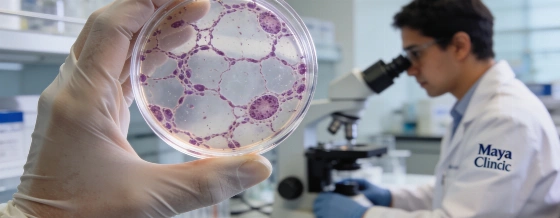
CAR-T cell therapy has changed the outlook for some blood cancers, but it has struggled against solid tumors. One major obstacle: many solid tumors lose the markers that CAR-T cells are designed to recognize, making them hard for the immune system to find and attack. Now, Mayo Clinic researchers have found a way to make aggressive thyroid cancer cells visible again, opening the door for targeted immune therapy.
The study was independently confirmed and published in Molecular Cancer under the title 'Redifferentiation-enabled TSHRCART cells overcome antigen loss in aggressive thyroid cancers' in September 2026.
“We often think about engineering the immune cell to overcome resistance,” said Saad Kenderian, M.B., Ch.B., co-senior author and Mayo Clinic hematologist-oncologist. “This work shows another possibility.”
CAR-T therapy has made major progress in blood cancers, but solid tumors present a different challenge. They can lose or reduce the antigens that CAR-T cells need to recognize, making the therapy ineffective. In aggressive thyroid cancer, especially anaplastic thyroid cancer, TSHR is often missing, which helps the tumor evade immune attack. As summarized by MedicalXpress, the loss of TSHR is a key reason why CAR-T therapies have not worked well in these cases.
The Mayo Clinic team confirmed that restoring TSHR expression using MAPK inhibitors significantly enhanced the effectiveness of TSHR-targeted CAR-T cells in aggressive thyroid cancer models, leading to better tumor control and survival outcomes compared to monotherapy.
Claudia Manriquez Roman, Ph.D., co-first author and process development engineer at Mayo Clinic, explained: “One of the key discoveries from our work is that antigen density matters. We showed that restoring TSHR expression with combination therapy can sensitize aggressive thyroid tumors to CAR-T cell attack, effectively turning a suboptimal target into a more vulnerable one. This approach may provide a new framework for enhancing CAR-T therapies across solid tumors where target expression is limited.”
The MAPK inhibitors did not interfere with the CAR-T cells’ ability to multiply or kill cancer cells. Instead, they created a short window—just two weeks of combined treatment was enough in preclinical models. After the drugs were stopped, TSHR levels dropped again, but the immune system had already acted.
John Copland III, Ph.D., co-senior author and cancer biologist at Mayo Clinic in Florida, pointed out that about 2,500 Americans die each year from metastatic thyroid cancer. “What’s exciting about this approach is that we’re taking advantage of the cancer cell’s own biology to restore TSHR expression by blocking MAPK signaling with molecular targeted drugs,” Copland said.
While this study focused on thyroid cancer, the idea could apply to other solid tumors where immune therapies have struggled. The Mayo team is now finishing studies to support a phase 1 clinical trial of TSHR-targeted CAR-T cells, both as a standalone therapy for tumors that still have TSHR and in combination with MAPK inhibitors for those that have lost it. As reported in the September 2026 MedicalXpress coverage, preparations for the first human trial are underway.
This research does not claim a cure or proven results in people yet. But it does offer a clear strategy to get around one of the toughest barriers in solid tumor immunotherapy. By focusing on changing the tumor itself, rather than endlessly modifying immune cells, Mayo Clinic’s approach could open new possibilities for CAR-T therapies in solid cancers. The evidence so far is preclinical, but the results are promising as the field moves toward clinical testing.