
Caribou Biosciences has decided to stop work on both its vispa-cel and CB-011 allogeneic CAR T cell therapy programs. The move comes as clinical-stage cell therapy developers face a tough market for raising funds. Vispa-cel was ready to enter a pivotal trial, and CB-011 had shown encouraging results in multiple myeloma. Instead of pushing these therapies forward, Caribou is now looking for strategic options to get the most value for its shareholders.
Rachel Haurwitz, Caribou’s president and CEO, called the decision “extraordinarily difficult.” She made clear the company still believes in the science behind both therapies. “Vispa-cel is pivotal trial-ready, with FDA alignment already reached on the Phase III clinical trial design. We believe both programs have demonstrated the potential for allogeneic CAR-T cell therapies to deliver deep and durable responses, while meaningfully expanding access for patients who urgently need treatment options,” she said. But Haurwitz pointed to the “current financing environment for allogeneic CAR-T cell therapies” as the main roadblock. She said it has become “increasingly challenging to secure the capital necessary to responsibly advance these programs.”
Vispa-cel, previously known as CB-010, was developed for relapsed or refractory B-cell non-Hodgkin lymphoma, while CB-011 targeted relapsed or refractory multiple myeloma.
This step back follows a period of progress for Caribou’s pipeline, as previously reported. The company’s shift shows just how quickly fortunes can change for advanced therapy developers. Even late-stage programs can get shelved if the money runs out.
On October 2, 2026, Caribou’s board signed off on a restructuring plan. The plan calls for ending further work on vispa-cel and CB-011, cutting a large part of the workforce, and exploring options like a merger, acquisition, or asset sale. An official SEC filing shows most layoffs should wrap up in the fourth quarter of 2026. The company expects restructuring costs to land between $15 million and $19 million.
Caribou’s board has set up a Transaction Committee to review and recommend next steps. There is no set timeline for finishing this process. The company says it will not give regular market updates until a deal is approved or the review ends, according to Business Insider.
CEO Rachel Haurwitz emphasized that the decision to halt the programs was driven by a deteriorating financial environment for allogeneic CAR-T therapies and increasing challenges in raising the capital needed for responsible development. She also stressed that discontinuing the programs does not reflect a loss of confidence in their therapeutic potential.
RoslinCT lands major grant to digitize cell therapy manufacturing
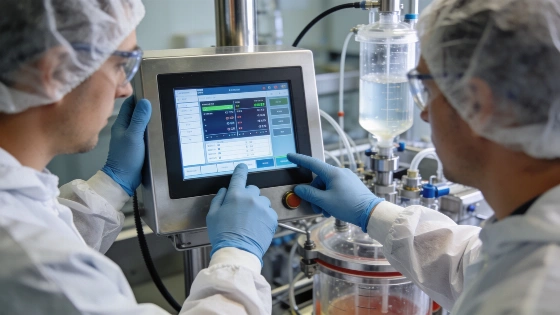
While Caribou scales back, RoslinCT is ramping up with a US$9.6 million research and development grant to speed up the digital overhaul of its cell therapy manufacturing in Scotland. Scottish Enterprise is backing the project. The money will help RoslinCT bring digital and AI tools into its manufacturing lines, aiming for better efficiency, stronger data connections, and higher standards in production.
Peter Coleman, CEO of RoslinCT, called the grant “an important investment in the future of advanced therapy manufacturing in Scotland.” He pointed out that digital technology is changing how cell therapies are made, making the process more efficient, consistent, and scalable while keeping quality high.
Andelyn Biosciences and PQP Group team up for EU and UK cell and gene therapy supply
In another move, Andelyn Biosciences has joined forces with PQP Group to help sponsors get cell and gene therapy products to clinical sites in the EU and UK. The partnership brings together Andelyn’s manufacturing know-how and PQP’s expertise in regional supply chains and Qualified Person services. The goal is to help sponsors handle the tricky process of importing, certifying, and delivering clinical material. PQP Group will also cover regulatory, logistics, and Qualified Person support for both the EU and UK markets.
The cell and gene therapy field is seeing both rapid tech progress and tough financial setbacks. This week’s news draws a sharp line: some companies are doubling down on digital upgrades and cross-border supply, while others are forced to pull back from the clinic even after scientific wins. In this sector, innovation alone won’t keep programs alive. Without steady funding and strong infrastructure, even the most promising therapies can get sidelined.