
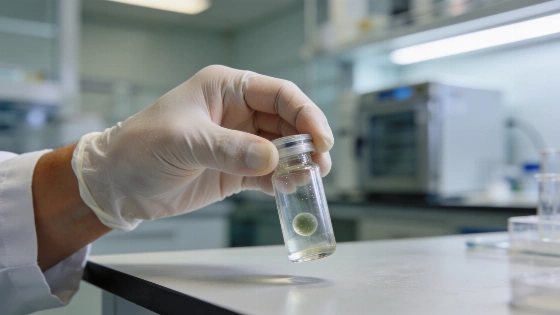
Shipping living cell therapies has always meant one thing: cold-chain headaches. Refrigeration, dry ice, and strict temperature controls. That could change soon.
CaseBioscience has joined a team led by Likarda. The group landed up to $7.3 million from the Advanced Research Projects Agency for Health (ARPA-H) through the BioStabilization Systems (BoSS) program. Their goal is simple. They want to make it possible to produce, store, and ship living cell therapies at room temperature. No more cold-chain. No more ice packs.
ARPA-H's BoSS program is distributing up to $87 million over four years to three selected teams, with RAB being one of them.
Inside ARPA-H’s BoSS program and the RAB team
The Reversible Ambient Biostabilization (RAB) team is one of three groups picked for the BoSS program. ARPA-H is putting up to $87 million on the table over four years. The money will fund different approaches to room-temperature cell preservation. The RAB team includes Likarda, Draper, CPSI Biotech, Fresenius Kabi, MiNK Therapeutics, CaseBioscience, and the Spencer Lab at the University of Colorado Boulder. Each brings expertise in preservation science, cell biology, metabolism, bioengineering, immunology, and manufacturing. According to an industry report on Cold Chain Platform, the BoSS initiative is focused on technologies that let cell-based biologics be made, stored, and shipped at or near room temperature. The aim is to cut out ultra-cold supply chains for good.
CaseBioscience is handling clinical media formulation, biopreservation, and cellular metabolism. These are key for testing and building new ways to keep therapeutic cells stable outside the cold chain. The first phase of the project runs 15 months. It started on September 24, 2026. The team is already deep into joint research and development. ARPA-H set up the funding as milestone-based. The group only gets more money if it hits tough research targets, as detailed in a BioBuzz industry analysis.
MiNK Therapeutics has confirmed that its agenT-797 cell therapy is included in the BoSS program as part of the RAB team, with efforts focused on demonstrating the stability of cell products at room temperature.
Scientific hurdles and industry impact
Keeping living cells stable in a dry state has stumped scientists for years. Two decades of work have brought little progress. Technical and engineering problems keep piling up. John Baust, PhD, of CPSI Biotech, put it plainly: "ARPA-H's BoSS program provides an unprecedented opportunity to tackle this from multiple scientific and engineering directions simultaneously. If successful, this work could represent a paradigm shift in how biologics are preserved, stored, and distributed."
The $7.3 million is not guaranteed. It is an "up to" figure. ARPA-H has not shared how the money will be paid out or if funding will go past the first 15 months. No preclinical or performance data have been made public. The effectiveness of any new technology is still unknown. ARPA-H wants to make advanced biological medicines as easy to ship as over-the-counter pills. But the science is not there yet. Big questions remain.
Why cell therapy access hangs in the balance
If the RAB team’s work pays off, the effect could be huge. Room-temperature preservation would cut cold-chain costs. More patients could get cell therapies that are now blocked by shipping problems. The field has seen big gains in cell therapy results, as shown in reported earlier for plasma cell neoplasms. But getting these therapies to patients is still a major hurdle.
ARPA-H’s BoSS program is a bold test of teamwork and new ideas. Three teams are racing to solve a problem that has stopped progress for years. No one has shared data yet. The funding is conditional. That shows how early and uncertain this project is. But if even one team cracks the code, cell therapy logistics could change overnight. The economics of advanced biologics would shift. For now, the industry is watching. CaseBioscience and its partners have a lot to prove.