
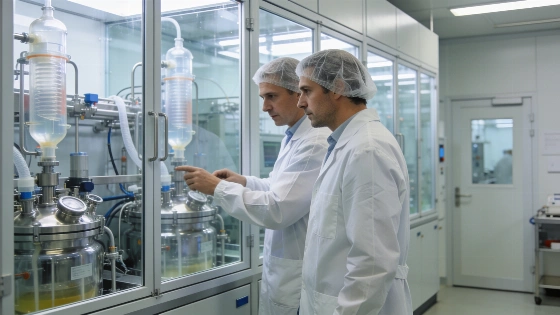
HIPRA Biotech Services is making a big bet. The company is tearing down old ways of working to handle the growing demands of modern biologics. Instead of small tweaks, HIPRA is building a single, connected system for development and manufacturing. The goal is clear: cut out bottlenecks and stay flexible as projects change.
This shift means breaking down the walls that usually slow things down. HIPRA now brings together development, manufacturing, quality, regulatory, and supply chain teams under one roof. Fewer handovers. Less friction. The company wants to avoid the usual delays that hit when moving from early development to GMP manufacturing. According to an independent company profile, HIPRA runs as a CDMO platform with full capabilities. It covers cell line development through to commercial production. Its Spanish sites handle development, manufacturing, quality control, regulatory, and logistics.MAI-CDMO profile.
HIPRA operates six manufacturing sites and eleven diagnostic centers, providing a robust industrial and geographic base for its CDMO expansion.
Faster development and modular sites
HIPRA is focused on speeding up the path from cell line work to GMP drug product. The company uses high-throughput development tools and streamlined workflows. Teams can now test and move projects forward faster and with more accuracy. The manufacturing setup is flexible. Modular areas, parallel bioreactors, platform-based equipment, and single-use tech let HIPRA shift strategies as client needs change. The company can run several projects at once.
This model goes beyond just making the product. Fill-finish, quality control, regulatory help, and logistics all stay inside HIPRA. Clients deal with one team, not a maze of outside partners. That means one point of contact as programs move toward commercial scale. In a public interview, HIPRA Biotech Services' leaders called the company a biological CDMO with mammalian, microbial, and aseptic fill-finish platforms. They support both clinical and commercial manufacturing.PharmaNow podcast.
Building resilience and expanding
HIPRA is not taking chances with supply. The company checks all key raw materials and parts. It uses regional sourcing, multiple suppliers, and keeps strategic stock to avoid disruptions. This is a core part of the model. The aim is steady progress for client programs. No surprises.
Growth is happening at the 200,000-square-meter Campus HIPRA in Spain. New investments will add more mammalian cell culture, quality control, banking, and fill-finish capacity. These upgrades will make HIPRA even stronger for supporting biologics from start to finish.
HIPRA has been linked to the European SPEEDCELL initiative, which aims to accelerate the development and manufacturing of biologics for emergency response, while also building a sustainable production base for routine programs.
Industry events and outlook
HIPRA Biotech Services plans to show its integrated model at CPHI Europe 2026 in Milan. The company is inviting industry players to meet its team and look at custom solutions for biologics work. HIPRA is putting real money into modular setups, supply resilience, and full integration. The message is simple. HIPRA wants to be the partner that can handle the twists and turns of modern biologics pipelines. In this field, delays and failed handovers can ruin a program. HIPRA is betting on infrastructure and tight operations to solve these problems. The big question remains. Can this model keep its promise of speed and flexibility as biologics get more complex?
HIPRA now operates as an international biopharma company. It has a presence in over 40 countries, employs more than 2,400 people, and ships products to over 100 countries, according to an independent review.SpainJobs company profile.