
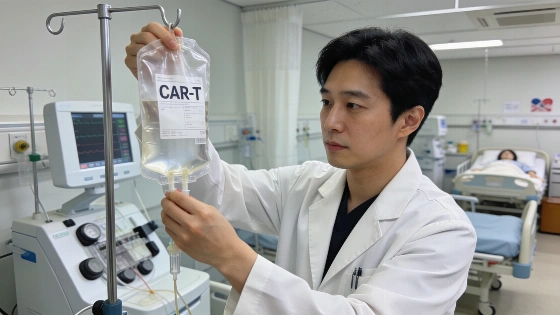
Drug price talks are underway. Curocell wants Rimkato, Korea’s first homegrown CAR-T therapy, on the National Health Insurance list before the year ends. CEO Gunsoo Kim is blunt. This is about real sales, not biotech buzz.
Rimqarto (anbalcabtagene autoleucel) was officially approved by South Korea’s MFDS on April 29, 2026, as the nation’s first homegrown CAR-T therapy for advanced diffuse large B-cell lymphoma.
Curocell is not just filling out forms. The company built a GMP plant in Daejeon. It launched Curolink, a cloud system that tracks every step from prescription to infusion. This digital network links hospital apheresis rooms, pharmacy teams, the factory, logistics, and Curocell’s ERP. The goal is clear: cut risk and speed up every step. Rimkato could reach patients in just 16 days after an order. That’s fast. For blood cancer emergencies, speed can mean everything.
Access is more than a slogan here. Curocell wants at least 25 CAR-T centers running this year and 30 by early next year. Big hospitals in Seoul are already in talks. Rimkato is made in Korea, so patients—especially older adults or those outside Seoul—can get treated at local hubs. They don’t need hospitals with their own cell processing labs. This tackles the supply headaches that have slowed cell therapy everywhere.
By September 2026, Rimqarto had advanced through Korea’s major reimbursement review stages, including a July Cancer Disease Review Committee decision and a September Drug Benefit Evaluation Committee decision, but final National Health Insurance coverage was still pending due to ongoing price negotiations and approval steps.
The pipeline is moving too. Curocell is planning a global Phase 3 trial for DLBCL second-line treatment. It’s targeting Japan, where 5,000 patients need this therapy each year. In China, the company is using the IIT system to speed up proof-of-concept for its Hyperkine™ solid tumor platform. More indications are coming. Phase 2 for adult acute lymphoblastic leukemia is set for late 2026. Phase 1 for severe lupus nephritis has already started. Curocell is also working on ‘In-vivo CAR-T’—a way to make CAR-T cells inside the body. First-in-human trials are planned for the second half of 2027. The company is using its own lentivirus tech and CD5 Binder patents for this push.
The real test is outside the lab. Kim wants to show “solid financial strength” by reporting post-launch revenue and market share. The goal is to move past biotech hype and show real cash flow. Curocell is also looking abroad. It’s preparing turnkey tech transfers to Türkiye and talking with big pharma about partnerships. The company wants to use its GMP plant and new platforms to go global.
Other markets are betting on allogeneic and switchable CAR-T. Curocell is taking a different path. As covered in reported earlier, the company is focused on fast domestic supply, digital logistics, and insurance-backed access. It wants to be a real contender in Korea and beyond.
Here’s what makes this story different. Curocell is willing to be judged by hard facts—revenue, delivery times, and clinical results. Not just promises. If it hits its insurance and sales targets, Curocell could set a new standard for Korean cell therapy. The next year will show if Rimkato’s launch is a real turning point or just another step in the global CAR-T race.