
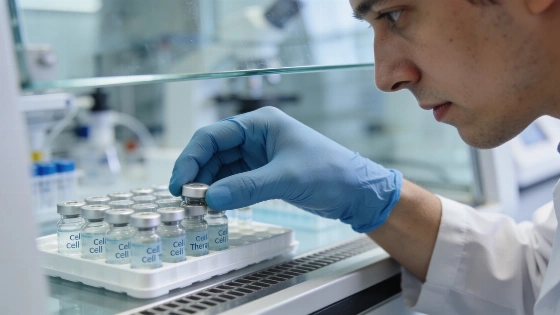
Hospitals and biotech labs are ramping up orders for engineered hypoimmune T cells, chasing a market that analysts expect to jump from USD 92 million in 2026 to USD 1.12 billion by 2036. The pace is picking up fast. Durable graft function and immune-evasive tweaks are turning off-the-shelf cell therapies from a research goal into a commercial product line.
By 2026, hypoimmune T cells should account for 43.9% of cell type demand. The industry is shifting toward edited immune cells with defined targets. HLA knockout paired with CD47 overexpression leads the engineering pack, making up 52.8% of the market. Oncology dominates applications at 46.1%. Hospitals and cell therapy centers are set to absorb 54.6% of end-user demand.
In October 2026, CRISPR Therapeutics reported that zugo-cel (formerly CTX112) continued clinical trials as an allogeneic CAR-T therapy targeting CD19, with rapid B-cell depletion and no severe CRS or ICANS observed at the 100 million cell dose in autoimmune cohorts.
Clinical evidence and regulatory momentum
Recent trial results have added real-world weight to the market's momentum. Sana Biotechnology tracked UP421 cells that kept C-peptide production going for 14 months after transplant, all without immunosuppression. That marks a new high for graft durability. According to an official company press release, CRISPR Therapeutics posted a 90% overall response rate and 70% complete response rate in 10 patients given a 600 million-cell dose of zugo-cel for relapsed or refractory large B-cell lymphoma. Of those with a year of follow-up, two-thirds stayed in complete remission. At this dose, grade 3 cytokine release syndrome (CRS) and immune effector cell-associated neurotoxicity syndrome (ICANS) each hit 17%, and serious infections showed up in 8% of cases.
Regulators are moving, too. The UK cut clinical study set-up times from 169 days to 122 days in 2026. Switzerland slashed study fees by 80% for eligible non-commercial trials. Century Therapeutics ran five clinical-scale batches of CNTY-813 and kept glycemic control in a mouse model for over 11 months. These steps are closing the gap between lab and clinic. Century Therapeutics plans to file an IND for CNTY-813 with the FDA in Q4 2026. Initial human safety and efficacy data could land in the second half of 2027, if preclinical work wraps up on schedule.
Regional growth and competitive landscape
The UK is out front with a projected 35.6% CAGR from 2026 to 2036. Switzerland and Germany follow. Japan lags with the slowest growth among tracked countries at 23.9%. Sana Biotechnology, Fate Therapeutics, Century Therapeutics, CRISPR Therapeutics, Allogene Therapeutics, Caribou Biosciences, Vertex Pharmaceuticals, Cellectis, Nkarta, and Sernova are all pushing distinct engineering strategies and supply chains into the market.
Pipeline shifts and new deals are redrawing the field. Caribou Biosciences has reworked its pipeline. Sernova and Seraxis have agreed to merge. Fate Therapeutics secured FDA clearance for its FT839 IND. These moves show a sector in flux. Repeatable manufacturing and easier handling at cell therapy centers will decide which programs scale up. For context, related changes in allogeneic CAR T cell therapy programs were reported earlier.
Century Therapeutics reported reproducible quality of CNTY-813 in five clinical manufacturing runs from its GMP Master Cell Bank, with a 29-day differentiation process in suspension bioreactor meeting predefined purity criteria at each stage. The company also reached 'general agreement' with the FDA on its preclinical package, manufacturing process for phase 1, and proposed phase 1/2 study design, though this does not constitute FDA approval to begin clinical trials.
Market segmentation and analyst perspective
Market splits run by cell type (hypoimmune T cells, NK cells, islet cells, and others), engineering approach (HLA knockout with CD47 overexpression, alternative immune-cloaking edits, encapsulation and combination approaches), application (oncology, autoimmune diseases, type 1 diabetes, and others), end user (hospitals and cell therapy centers, biopharma companies, research institutes and CROs), and region (North America, Latin America, Western Europe, Eastern Europe, East Asia, South Asia and Pacific, Middle East and Africa).
Demand is shifting toward hypoimmune cells that keep working without ongoing immune suppression. Companies that can deliver consistent manufacturing and simple use at the clinic will set the pace. The current evidence points to a market on the edge of major change. The programs that turn technical promise into scalable, repeatable products will meet the operational demands of modern medicine.