
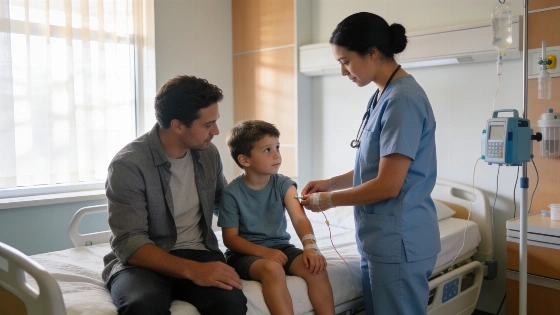
A year after getting two outpatient infusions of experimental CAR T cell therapy, a three-year-old boy with metastatic liver cancer is still cancer-free. His story, published in the New England Journal of Medicine on September 9, 2026, stands out. The tumor had already spread from his liver to his lungs and did not respond to surgery or chemotherapy. Multiple independent reports say this is the first time a child with metastatic hepatoblastoma has gone into full remission after CAR T cell therapy.
The clinical trial that enabled this breakthrough is known as CARE (Chimeric Antigen Receptor Expressed in T-Cells for Pediatric Solid Tumors), a Baylor College of Medicine study focused on children with relapsed or refractory solid tumors.
The boy started with a tumor the size of a large orange in his liver. It quickly spread to his lungs. He went through several surgeries and rounds of chemotherapy, but the cancer kept coming back. With no standard options left, his parents signed him up for a clinical trial at Baylor College of Medicine in Texas. There, researchers are testing a new kind of CAR T cell built to find and kill cancer cells hidden deep in organs.
This therapy is not just a tweak. The CAR T cells are engineered to spot glypican-3 (GPC3), a protein found on several cancer types, including the boy’s hepatoblastoma, but rarely seen in healthy tissue. According to Infobae España, the boy got two infusions of GPC3-targeted CAR T cells, eight weeks apart. The first dose shrank the cancer, and the second made all signs of metastatic disease disappear on scans.
After the first infusion, the patient showed a partial response, and following the second infusion, imaging confirmed the complete disappearance of metastatic disease. Remission was maintained for at least 12 months after treatment, with no signs of relapse reported as of September 2026.
After two rounds of these custom cells—made from the boy’s own immune system and given eight weeks apart—his tumors were gone. The first dose shrank the liver tumor. The second cleared all detectable cancer in both the liver and lungs. A key liver cancer marker dropped sharply, and scans showed no tumors left. The whole process happened in an outpatient clinic. The boy had no serious side effects, like neurotoxicity or runaway immune reactions, which have caused problems in earlier CAR T trials.
Within four weeks, the engineered cells had reached his liver. They were still found in his blood nine months later. This year-long remission is a sharp contrast to the quick relapses after earlier treatments. Study author David Steffin at Texas Children’s summed it up: "a durable complete response in a chemotherapy-resistant solid tumor can be achieved entirely in the outpatient setting without systemic toxicity."
Still, this is just one case. The trial is still enrolling children and young adults from one to 21 years old, aiming for up to 30 patients. The boy’s strong response may be partly because CAR T cells tend to build up in the liver and lungs. Longer follow-up is needed to watch for late risks, like uncontrolled cell growth. The kill switch is a safety net, but it has not yet been tested in real-world emergencies.
If other patients, especially those with bigger or more aggressive tumors, see the same results, this approach could finally give CAR T therapy a way to fight solid cancers. Solid tumors make up most cancer cases and deaths worldwide. Liver cancer is the third leading cause of cancer death globally, so the stakes are high.
This case shows that with the right target, cell engineering, and safety controls, it is possible to break through some of the toughest barriers in solid tumor immunotherapy. The next challenge is to turn this one remarkable result into a treatment that works for many. For now, the evidence is clear: with the right design, even the most stubborn cancers can be pushed back, and the limits of cell therapy are not as fixed as once thought.