On October 12, 2026, Jamie Harrell joined Fate Therapeutics’ executive leadership team while its off-the-shelf CAR T-cell programs remained in clinical development. He will lead market development and commercialization strategy across autoimmune and oncology programs.
The immediate focus includes FT819, which Fate is evaluating across autoimmune diseases. One study, RECLAIM-LN, is a Phase 2 trial in refractory lupus nephritis that the company describes as potentially registrational. FT839 is in a Phase 1/2 basket trial spanning autoimmune indications, including rheumatoid arthritis. Neither program has established efficacy or regulatory approval in the supplied announcement. Separately, a clinical-trial listing for FT819 study NCT06308978 describes a Phase 1 study in B-cell-mediated autoimmune disease as recruiting, with an age range of 12–70. The entry was updated May 22, 2026.
Fate Therapeutics is developing cell therapies derived from induced pluripotent stem cells for oncology and autoimmune diseases.
Planning for care beyond specialist centers
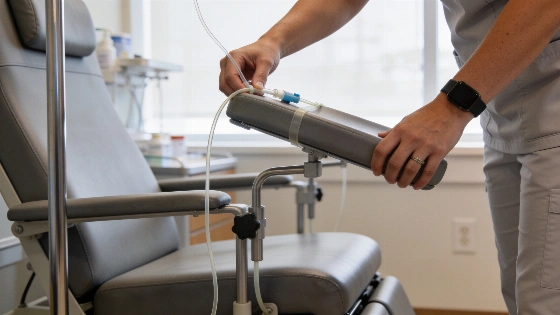
Fate says Harrell will develop physician engagement around the possibility of giving its off-the-shelf CAR T-cell programs in outpatient settings. The company wants to extend access to community hospitals and physician practices, where many people with autoimmune disease receive care. That remains a strategy under development, not evidence that outpatient delivery is routine.
Clinical evidence must come before any regulatory application.
A recent update on Fate’s cell-therapy pipeline did not report new clinical results for FT819 or FT839. The available research materials also provide no independent confirmation of regulatory approval or routine outpatient use for either program.
Harrell’s background is closely tied to the lupus market. Most recently, he was Vice President of Marketing and Commercial Operations at Aurinia Pharmaceuticals, where he worked to accelerate growth for voclosporin, described in the announcement as the first oral therapy for lupus nephritis. Fate CEO Bob Valamehr cited Harrell’s work on Remicade indications and an in-office infusion model. The practical questions of patient selection and care-team coordination are also addressed in this CAR T guidance report.
Commercial experience meets an unproven clinical opportunity
Harrell previously served as Chief Commercial Officer at Avalo Therapeutics, overseeing commercialization strategy for six rare disease assets. At Covidien, he was Vice President and General Manager of Specialty Pharmaceuticals, leading a 350-person commercial organization. Earlier roles included MedImmune and Centocor, Inc. He also worked at Rhone-Poulenc Rorer.
Fate says Harrell contributed to the commercialization of more than 25 products. Lovenox® and Remicade® each achieved more than $1 billion in annual U.S. sales. Synagis® also exceeded $1 billion in annual U.S. sales.
His appointment gives Fate commercial experience as it prepares for a possible move from clinical development to commercial execution. FT819 and FT839 still need clinical evidence to support a viable treatment and care model. Available research results do not independently confirm decisions or outcomes following Harrell’s appointment.