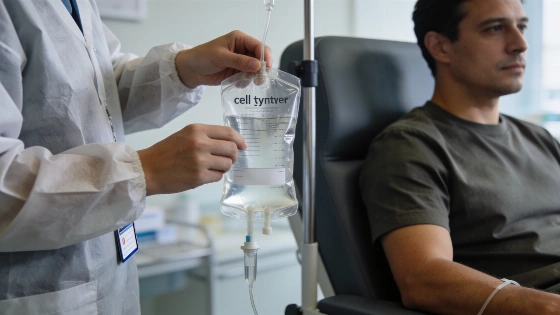
At The Third Xiangya Hospital in Changsha, China, researchers followed patients whose B-cell acute lymphoblastic leukemia returned after a stem-cell transplant. Thirteen of 14 reportedly achieved complete remission after donor-derived anti-CD19 CAR-T therapy. Seven of the eight patients with extramedullary disease, leukemia growing outside the bone marrow, also entered remission. Available independent research does not confirm this specific study or its reported outcomes.
Median follow-up was 13.8 months. Median remission lasted 12.7 months across the cohort and 14.7 months among patients with extramedullary disease; the longest remission exceeded 50 months. Median overall survival and event-free survival had not been reached at the time of analysis.
A separate pharmacokinetic analysis covered 131 patients with B-ALL and 2,184 observations of autologous CD19-CAR-T cells; the median time to peak cell expansion was 13 days. It studied patients’ own cells, not donor-derived CAR-T, and does not verify the 14-patient study’s remission results.
Why use donor-derived cells after transplant
Autologous CAR-T is made from a patient’s own T cells. This approach instead uses engineered cells from donor sources. After intensive treatment and transplantation, patients may have too few functional T cells to produce an effective autologous therapy. Donor-derived cells can bypass that manufacturing obstacle, but they may attack the recipient’s healthy tissues. The recipient’s immune system may also reject the infused cells.
CD19 is present on B-lineage cells, including many B-cell leukemia cells. The engineered receptor lets T cells recognize CD19 and attack cells that display it. In this study, CAR-T cells remained in patients’ blood for a median of 5.9 months, with observed persistence ranging from 1.2 to 51.6 months. The separate autologous-cell analysis covers different patients and a different cell source. It cannot independently confirm these donor-derived results.
Memorial Sloan Kettering’s WU-CART-007 program studies an allogeneic anti-CD7 CAR-T therapy for relapsed or refractory T-ALL and T-lymphoblastic lymphoma. It is a separate research program, not a CD19 treatment and not confirmation of the reported B-ALL findings.
Promising responses come with important limits
CAR-T cells can struggle to control extramedullary disease. Leukemia deposits outside the marrow may sit in environments that limit immune-cell access or function. Seven remissions among eight patients are notable, but a cohort this small cannot show how reliably the result will hold in other patients.
Four patients with extramedullary disease had Philadelphia chromosome-positive leukemia and received maintenance tyrosine kinase inhibitors after CAR-T treatment. One received dasatinib, two received ponatinib and one received olverembatinib. The cases offer a rationale for pairing immune-cell therapy with targeted treatment, but the study does not show that the added drugs improved outcomes.
Severe toxicities occurred. One patient experienced grade 3 cytokine release syndrome and grade 4 immune effector cell-associated neurotoxicity syndrome. Another developed acute gastrointestinal graft-versus-host disease, followed by chronic disease affecting the skin and lungs. The authors called the overall safety profile manageable. The reported complications still show why donor-cell alloreactivity remains a central concern.
Shanghai Unicar-Therapy Bio-Medicine Technology manufactured the product. The trial was registered with the Chinese Clinical Trial Registry in August 2020. Two authors were employees of the manufacturer; the other authors declared no conflicts of interest. The trial was registered retrospectively and enrolled just 14 patients at one center. A separate CAR-T access case illustrates another barrier: reaching treatment at all.
The reported remission rate and responses in extramedullary disease support testing this salvage strategy in larger studies with longer follow-up. Severe immune toxicities and graft-versus-host disease also require close scrutiny. The available materials do not provide independent follow-up on this cohort for later relapse. They also lack follow-up on late toxicity or graft-versus-host disease outcomes. No regulatory decision is reported. The results have not been independently corroborated.