
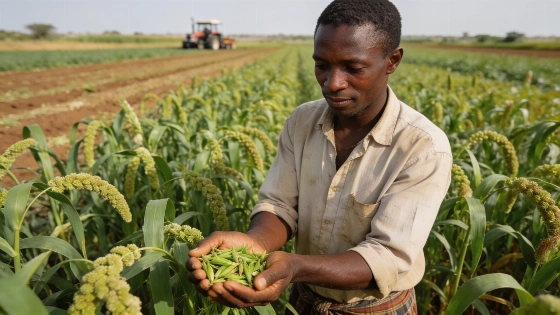
PG Economics, a UK consultancy, claims genetically modified crops have added 385 billion dollars to farm incomes worldwide since 1996. More than half of that, they say, went to farmers in developing countries. The group presented these findings in Manila on September 17, 2026.
A recent Pan-Asia Farmers Exchange Programme, co-organized by CropLife Asia and Biotechnology Coalition of the Philippines, highlighted the role of agri-biotechnology in supporting climate resilience and food security in the region.
PG Economics says that in 2024 alone, GM crops saved 25.5 million hectares of land by raising yields on existing fields. That meant less pressure to clear new land for farming. These results were shared in a webinar run by ISAAA and CropLife Asia. Both groups have strong ties to the biotech and crop protection industries. Speakers included Dr Rhodora Romero-Aldemita of ISAAA and Dr Stuart Smyth from the University of Saskatchewan. Both have published on biotech crop economics and policy before.
Industry discussions in Asia have increasingly linked the adoption of GM and biotech crops to strategies for climate adaptation and yield improvement, though these conversations do not independently verify the economic or environmental impact figures cited in the PG Economics report.
The claim that developing countries got more than half the farm income benefit pushes back against the idea that GM crops mostly help big farmers in rich countries. If the numbers are right, smallholders in Asia, Africa, and Latin America—especially those growing GM cotton, maize, or soybean—have gained through better yields, fewer pest losses, and lower insecticide bills. India stands out. It has one of the world’s largest GM cotton areas. The impact of Bt cotton there is still debated in academic circles. Indian officials and farm groups will likely want to check these claims against their own data before accepting them.
Three decades on, the stakes are high. Economic and environmental impacts are huge. But trust in the evidence depends on clear funding and methods. Industry-backed reports like this can offer useful data. They do not replace independent, peer-reviewed global studies. Until those appear, PG Economics’ numbers will shape the debate—but not end it.
A Reuters agricultural sector summary from September 2026 notes that wider industry coverage has focused on weather and market pressures affecting yields and demand. It has not independently confirmed the specific numbers in the PG Economics report.