
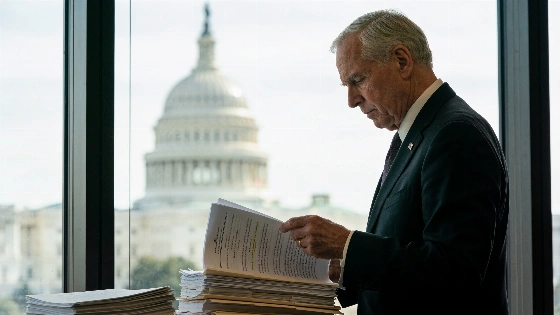
Chinese biotech firms are set to grab more than two-thirds of global biopharma licensing deal value this year. Five years ago, they held less than 5%. For Senator Todd Young, this is more than a business shift. He sees it as a direct threat to US national security and the country’s lead in innovation.
According to Reuters, almost half of U.S. in-licensing deals for foreign drugs in 2025 involved Chinese companies, highlighting China's central role in U.S. drug sourcing and partnerships.
Washington is still debating bills to limit investment in Chinese biotech and bring drug manufacturing back to the US. But Young is looking at a bigger, longer-term risk: the loss of America’s innovation edge. He warns that China’s biotech gains could spill into agriculture, energy, and even defense. “It's the very same biotech. It's the very same science. It's just directed towards solving different problems.”
Young’s background shapes his view. He’s a Naval Academy graduate, a former Marine Corps intelligence officer, and a three-term House member. He sees China’s push into biotech as a calculated move. The sector is profitable and can reshape many industries. “People will pay a lot in order to extend their lives or improve their lives,” he says. That’s why Beijing is pouring money into biotech.
U.S. officials are currently weighing rules that would allow most pharmaceutical licensing deals with China to continue, signaling that the issue remains active and unresolved at the policy level.
Last year, the NSCEB put out 49 policy recommendations to strengthen US biotech. But Young says the top priority is simple: put a federal biotech leader in the White House “who has the president's ear.” This person would coordinate across agencies, set a national biotech strategy, and make sure the US doesn’t lose the next wave of breakthroughs to foreign rivals. “Empowered to look across different federal agencies and develop a whole-of-government plan related to biotechnology,” Young says. This leader could bring agency heads together and update strategy as things change.
Young isn’t asking for a copy of China’s “brute force economics.” He wants to back US innovators and manufacturers, get the private sector moving, and steer biotech advances toward defense needs—like shelf-stable blood for troops or biosensors for threat detection. He also wants to build up the workforce through education and recruitment.
On the defensive side, Young backs new laws to scrutinize US investment in Chinese drug developers, even if some biotech investors don’t like it. “We need to make sure that we are putting controls on the use of Chinese biotech by our own market,” he says. He argues that relying too much on China only makes the US more vulnerable and gives China more resources.
The future of US biotech now depends on whether leaders act on Young’s call for strong, centralized leadership and smart investment at home. The numbers are clear: China’s biotech sector is no longer a distant rival. It’s a direct challenger to US innovation. Without a White House-level response, the US could watch the next generation of biopharma breakthroughs—and the jobs and security they bring—move overseas for good.