
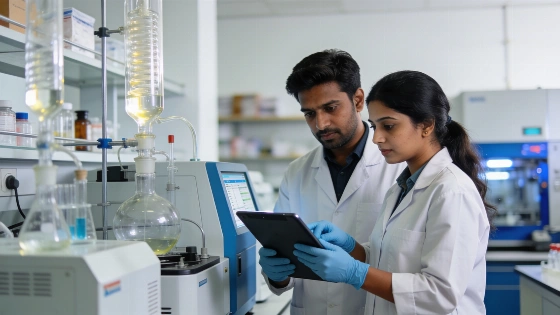
Pressure is mounting inside India’s pharmaceutical boardrooms. At a recent New Delhi summit, Biocon chairperson Kiran Mazumdar-Shaw didn’t mince words. She warned that the industry’s habit of playing it safe is choking off new drug development and putting its global standing at risk.
“In pharma and biopharma, the pipeline is the lifeline,” Mazumdar-Shaw said. Drug discovery remains a brutal numbers game: only one or two out of every ten candidates ever make it to market. She pressed Indian firms to break old habits and use digital technology to speed up research, arguing that the sector needs original molecules, not just more generics.
By November 2025, seven Centers of Excellence under India’s national pharmaceutical education institutes had approved 111 research projects, resulting in 46 scientific publications and six patent applications.
Sun Pharma’s Dilip Shanghvi and Glenmark’s Glenn Saldanha joined Mazumdar-Shaw on stage. Shanghvi pointed out that while Indian generics flood global markets by volume, they bring in just 20% of the value. “If we want to succeed and become big globally and help patients, our focus on innovation is needed and that I think should be the priority,” he said, tying the sector’s future to Prime Minister Modi’s Viksit Bharat 2047 agenda.
Saldanha split the industry into two main camps: those sticking with generics and biosimilars, and those betting on innovation. He argued that scaling up new drug development—through deals or licensing—will decide who stays relevant over the next decade. “We need a continuous pipeline, and we should see a lot in the next five to 10 years,” he said.
Mazumdar-Shaw pointed to Biocon’s anti-cancer drug now in Phase III trials as proof that Indian labs can compete. She noted that regulators are finally picking up speed after years of slow progress. “It is time to leapfrog with the help of digital technology. We should deep dive and emulate not just China but also countries like Australia to move molecules rapidly into the clinic and beyond,” she said, criticizing the routine of sending animal studies overseas.
Shanghvi cited Sun Pharma’s $11.75 billion buyout of Organon in the US as a move to expand its reach and bring new drugs to market faster. Organon’s infrastructure and regulatory know-how, he said, will help Sun Pharma clear hurdles in markets where it previously struggled to get products registered or distributed.
The Indian government’s PRIP initiative has allocated a total budget of ₹700 crore for seven Centers of Excellence, with additional funding streams for company, SME, and startup research in priority pharma and MedTech areas. Updated guidelines for Component B were published on October 1, 2025.
The Indian Foundation of Quality Management drew in leaders from Tata Sons and TVS Motors alongside pharma heavyweights, showing that the innovation debate cuts across sectors. The message from the event: without a sharp turn toward risk and digital transformation, India’s pharma sector could lose ground as global rivals push ahead.
Similar warnings have surfaced in other industries, as seen in the reported earlier struggles of biotech firms facing the same risk-innovation squeeze worldwide.
India’s pharma majors have the scale and talent to lead, but the clock is ticking. Most public companies still spend less than 10% of revenue on R&D, according to an Express Pharma industry assessment. The Economic Survey 2025–26 pegs the sector’s turnover at ₹4.72 lakh crore for the 2025 financial year, with domestic sales near $60 billion and forecasts topping $130 billion by 2030. Yet the gap between manufacturing muscle and innovation remains wide.
Regulatory rules have long forced foreign drug candidates to clear Phase I trials abroad before Indian studies could begin, while homegrown molecules faced fewer barriers. Patent protection has nudged big firms toward proprietary research, but clinical trials still eat up the most capital and carry the highest risk, as The Economic Times reports.