
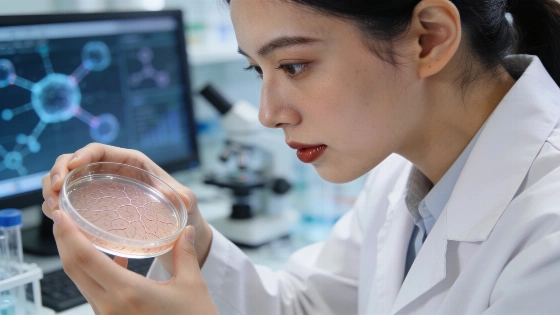
Lab teams in California and Seoul are chasing a new kind of anti-ageing. Their aim is not just smoother skin. They want to reset the ageing process itself—by flipping the genetic switches that control how skin cells behave. This is the focus of a new partnership between US biotech Junevity and Korean beauty giant Amorepacific. If it works, it could change the rules for the whole industry.
For years, brands have promised to 'reverse' ageing at the cellular level. Most creams and serums only hydrate or support the skin barrier. They do not make skin cells act younger. Junevity and Amorepacific think gene science can close that gap. They want to move from marketing talk to real molecular change.
Junevity's RESET platform leverages human disease omics, genetic linkages, and machine learning to identify novel transcription-factor targets, forming the core of its target-discovery engine.
The science behind the reset
Junevity started in 2023 at the University of California, San Francisco. The company is focused on finding the gene 'switches'—transcription factors—that decide how skin cells age. Every cell has the same DNA. What makes a skin cell different from a brain cell is which genes are turned on, and how much. Transcription factors work like dimmer switches. They turn gene networks up or down. Junevity believes that, as we age, some of these switches get out of sync. Cells start to act older than they should. The RESET platform uses human disease data, genetic links, and machine learning to find which transcription factors matter most for ageing. This is explained in an official company press release.
So far, all the research is in lab models. No human skin tests yet. Junevity’s main business is making medicines for age-related diseases like type 2 diabetes and obesity. They use siRNA to silence certain proteins. The company already has a deal with Eli Lilly’s ExploR&D programme for Parkinson’s disease. In January, Junevity co-founder Dr Janine Sengstack led research published in PNAS. The team showed that changing a single transcription factor could push ageing cells toward a healthier state in lab models, including human fibroblasts. These are the cells that make collagen and elastin in skin. Longevity.Technology reports that Junevity’s main strength is in therapies for age-related disease. The skincare project is its first step into cosmetics.
From lab to skincare shelf
Amorepacific has been a major player in Korean beauty since 1945. The company has invested in Junevity and signed a licensing deal for cosmetics. Junevity will find the gene targets. Amorepacific will try to make skincare products that affect those same pathways. But turning gene science into a cream is tough. The companies have not said what ingredients or formulas they will use. There is no product, price, or launch date yet.
This project will not just look at wrinkles or hydration. It will also track molecular markers like collagen, elastin, and gene activity. The teams plan to use 'ageing clocks'—tests that estimate biological age from cell patterns. Dr Sengstack told Longevity.Technology the goal is to “reprogram the skin back to that younger, healthier state.” But changes in gene activity or ageing clocks are only markers. They do not prove lasting reversal. If the approach works on all these levels, it could set a new bar for proof in skincare.
The partnership between Amorepacific and Junevity is structured as a dedicated licensing agreement for cosmetic applications, with Amorepacific Ventures also completing an equity investment. This move signals a shift from a simple research memorandum to a commercial structure, as reported in Korean business media.
Right now, a true gene-level reset for ageing skin is still unproven. No product is on the market. But the Junevity-Amorepacific alliance marks a shift. The industry’s boldest claims are finally being tested in the lab, not just in ads. If the science holds up, the old days of empty anti-ageing promises could be over. The standard for real innovation in skincare may soon rise.