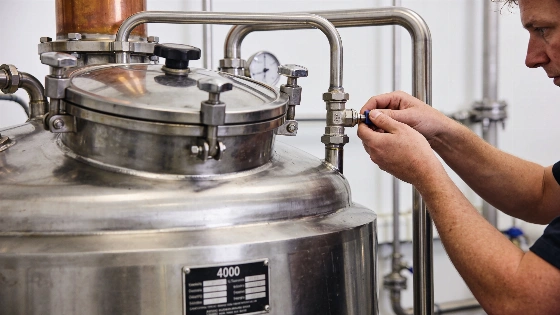
Daisy Lab had installed a 500-litre fermenter onsite in Q1 this year and was working to scale its process. Now the New Zealand precision-fermentation startup has been acquired by Mycofeast, a UK company aiming to scale and commercialise bovine lactoferrin.
No layoffs are associated with the acquisition, Daisy Lab co-founder and CEO Irina Miller told Green Queen.
The deal gives Daisy Lab access to Mycofeast’s development and engineering capabilities. It also brings manufacturing capacity and commercial operations within reach. The immediate work is to transfer and optimise the lactoferrin process for production at Mycofeast’s plant. Regulatory filings and customer trials are planned over the next 12 months.
Manufacturing capacity changes the scale-up equation
Miller said Daisy Lab can now draw on Mycofeast’s capabilities instead of building manufacturing infrastructure on its own. That could speed up progress after the startup had been working to scale fermentation alongside downstream processing.
“We weren’t running a sales process,” Miller told Green Queen. Daisy Lab had been working with Mycofeast as a potential partner and customer. Talks shifted toward an acquisition amid fundraising challenges and difficult market conditions for food technology and biotechnology companies.
Daisy Lab was founded in 2023 by Miller. Nikki Freed and Emily McIsaac were also co-founders. The company uses precision fermentation, giving microbes genetic instructions to produce targeted proteins during fermentation. Its portfolio includes beta-lactoglobulin and lactoferrin, with bovine lactoferrin now its most advanced programme.
Lactoferrin is an iron-binding glycoprotein found in bovine colostrum and human milk. Purified lactoferrin is difficult to source. The source reports prices of $600 to $2,000 per kilogram. Scarcity and high value, alongside relatively low inclusion rates, make it a more immediate commercial target than bulk dairy proteins. Miller said she still sees future potential for beta-lactoglobulin and other bulk proteins.
Human lactoferrin remains an earlier-stage option
Daisy Lab has produced recombinant human lactoferrin at laboratory scale. The programme was put on hold late last year while the larger fermenter was installed, and the company has since prioritised bovine lactoferrin scale-up. Miller said Mycofeast subsidiary Evolutia Bio could help advance the human programme if it shows commercial potential. Evolutia Bio has strain-development capabilities in California.
Mycofeast says its platform covers strain development and biosynthesis. It also works on enzyme design, fermentation scale-up and industrial production. The company operates a 16-million-litre fermentation plant in Europe. CEO Witek Hruzewicz said Daisy Lab adds a dairy-protein platform and a team with scale-up experience.
Other companies are already advancing or selling fermentation-derived lactoferrin. Helaina’s human lactoferrin is in around a dozen US products, and the company is working with Nestlé on baby formula development.
All G has launched bovine lactoferrin in the United States. TurtleTree sells its bovine protein through products including IronKind and Waywyld’s supplement powder. Vivici has self-affirmed Generally Recognized as Safe status for its bovine lactoferrin in the US.
The acquisition comes amid consolidation across alternative protein. More than 90 companies have merged or been acquired since September 2024. Others have gone bankrupt or ceased operations. Daisy Lab plans further bovine lactoferrin scale-up and optimisation, with regulatory filings and customer trials also ahead. The process is due to transfer to Mycofeast’s manufacturing plant.