By 15 October 2026, OMS1620 had reached the single-ascending-dose stage of its phase 1 study. OMass Therapeutics has raised £230 million ($310 million) to advance the drug and its wider rare-disease pipeline. The oversubscribed Series C takes the Oxford-based company’s total funding to approximately £360 million. OMass said the capital will support small-molecule programmes in endocrinology and immunology, according to its Series C announcement.
The money is intended to move OMS1620 into phase 2 trials for two conditions driven by excess adrenocorticotropic hormone, or ACTH: ACTH-dependent Cushing's syndrome (ADCS) and congenital adrenal hyperplasia (CAH). CAH is a genetic condition present from birth. Impaired cortisol production can weaken the feedback signal to the pituitary, leading to excess ACTH. Syncona says CAH can affect growth and development. It can also affect fertility and the body’s response to stress.
OMass is entering a field where Vertex Pharma’s atumelnant is already in late-stage development for CAH and phase 2 for ADCS. Vertex added the MC2 antagonist to its pipeline through its recently closed $10 billion acquisition of Crinetics. On 6 July 2026, Vertex agreed to acquire Crinetics for $85 per share in cash, valuing its equity at about $10 billion, or approximately $8.8 billion after cash. Atumelnant is an oral ACTH-receptor antagonist. Vertex has described the programme as pivotal-stage for adults with CAH and phase 2/3 for children.
Two programmes move toward clinical testing
OMS1620 is an oral small-molecule antagonist of the melanocortin-2 (MC2) receptor, which responds to ACTH. OMass designed it to stay bound to the receptor for an extended period and maintain antagonist activity as ACTH levels rise. Chief executive Ros Deegan called the candidate “sticky on the receptor”. OMass believes the drug could have a “best-in-class” profile. Its planned phase 2 trials will test that claim in patients.
The new financing is intended to move OMS1620 into phase 2 for CAH and ACTH-dependent Cushing’s syndrome. The proposed mechanism aims to suppress excessive adrenal stimulation while patients receive physiological doses of glucocorticoids. Controlled patient trials have not yet established clinical efficacy. Deegan told Fierce Biotech that OMass plans to use the funding to strengthen its development capabilities.
The round will also pay for clinical testing of an SLC15A4 inhibitor. OMass is developing the drug for lupus and other diseases linked to interferon overproduction and pathogenic B-cell activation. The Series C is meant to fund initial clinical data for this earlier-stage programme, taking the company’s work beyond endocrine disorders.
Deegan said the funding meant OMass was “entering our next phase of growth with the resources to translate that progress into a portfolio of clinically differentiated medicines for patients.”
Investors back an internally built pipeline
Bain Capital Life Sciences and Forbion co-led the Series C. Novo Holdings also co-led the round. Janus Henderson Investors and SV Health Investors joined, as did Jefferson Life Sciences. Every existing investor participated. They included Syncona and GV, along with Sanofi Ventures and Northpond Ventures. Syncona contributed £7.5 million ($10.1 million), according to its financing announcement.
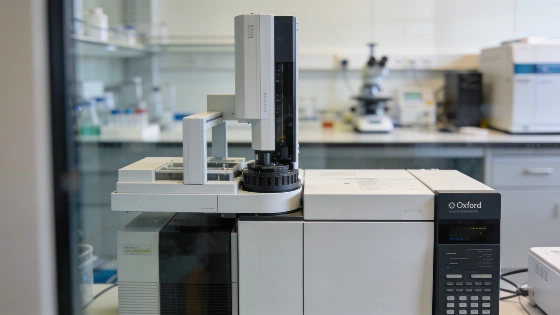
Forbion principal Audrey Cacaly said the two programmes were “part of a pipeline built entirely through internal discovery, underscoring the productivity and breadth of OMass' platform and its potential to generate meaningful new medicines across endocrine and immunologic diseases.” OMass’s OdyssION platform uses native mass spectrometry to find compounds that bind molecular targets. The company combines that work with biochemistry and custom chemistry, then assesses the compounds’ functional effects in a cellular environment.
OMass also has a Roche partnership. Roche’s Genentech unit has pledged up to $420 million for a project seeking new therapies for inflammatory bowel disease. In a separate UK life-sciences deal, AVS Bio’s Biorbyt deal expanded the buyer’s biomaterials catalogue. It also expanded its digital presence.