
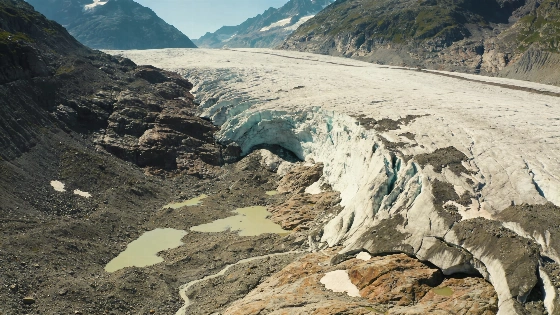
GLAMOS has confirmed a brutal year for Swiss glaciers. More than five percent of their ice vanished in just twelve months. This is the second-worst annual loss since 1950. The Alpine landscape is changing fast.
According to a Reuters analysis, the 5.5% drop in 2026 is only topped by the record melt of 2022. The pace of glacier retreat is speeding up. The numbers do not lie.
Between 2022 and 2026, the rate of glacier melt in Switzerland was more than double that of any previous five-year period on record.
What caused this sharp melt? GLAMOS points to months of heatwaves from May through September. Winter brought almost no snow. Snow depths were far below normal. Glaciers were left bare as summer heat hit. They had no shield.
Heat and missing snow drive glacier retreat
Every month from May to September was dry. Each month brought at least one heatwave. The freezing level shot above 4,000 metres for 76 days. That is more than double the usual. June's heat stripped away the snow cover that usually protects the ice. By September, even at 3,500 metres, there was no snow left. Not a patch.
GLAMOS is blunt: "Alpine glaciers have no chance of surviving in the long term" under these conditions. The scale is huge. Between July and September, Swiss glaciers lost about 2,200 billion litres of water. That is over four times what all Swiss households use for drinking in a year.
GLAMOS and the Swiss Commission for Cryospheric Observations reported that in 2026, the average thickness of individual glaciers decreased by 2.5 to 4 meters, with some glacier tongues losing up to 10 meters.
What this means for the Alps
In just five years, Swiss glaciers have lost nearly 20 percent of their ice. The trend is clear. Each year of heat and low snow makes it harder for glaciers to recover. GLAMOS data is stark. Unless the weather changes in a big way, Alpine glaciers are at risk of disappearing. This is happening now. Water supplies, ecosystems, and the region's stability are already feeling the strain.
Major glaciers like Aletsch, Rhone, and Clariden saw their highest melt rates ever in 2026. Aletsch Glacier and Glacier de Tsanfleuron set new records for mass loss, according to a BBC report. The Alps are losing ice fast. The future looks uncertain.