
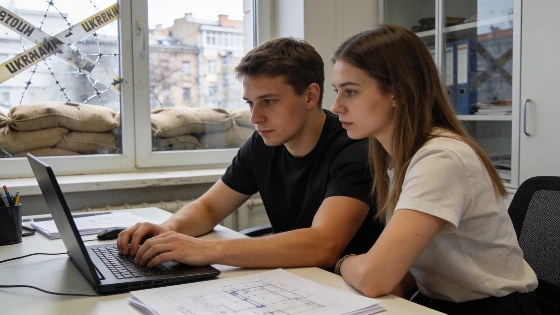
Kharkiv’s Global Tech forum did not pause for air raid sirens. Ukraine’s tech and finance leaders gathered, ready to talk growth. Not survival. The biggest headline: France’s Credit Agricole is close to buying Bank Lviv. This is a major signal. European investors are still betting on Ukraine’s banks, even under fire. But as of 2026, there is no official confirmation that the deal is done. Regulatory filings and public statements are still missing, according to the latest regulatory searches.
Ihor Kuropii, Credit Agricole’s director for corporate business and financial markets, put it plainly: “We are in the final stages of acquiring Ukraine’s Bank Lviv. In terms of investing in the Ukrainian economy, our words match our actions.” Bank Lviv was once a small regional lender. Since the 2022 invasion, it has become a key partner for global financial institutions. Its location in western Ukraine means lower risk. The bank’s shareholders—Switzerland’s Responsibility Participations AG, New Progress Holding, and the Nordic Environment Finance Corporation—show how much international money is now tied to Ukraine’s future.
By 2026, the Brave1 defense-tech platform had united around 2,300 companies, over 5,000 technology projects, and more than 200 AI solution developers.
Defense tech pivots to local production
Ukraine’s defense tech is changing fast. The Brave1 state defense cluster is now spending its Hr.7 billion ($159 million) budget to build parts at home. The goal is clear: stop relying on imported components for drones and explosives. Oleksandr Bornyakov, head of Brave1’s supervisory board, said it straight: “Anyone who masters the manufacturing of these components today will build a resilient business for decades.” The numbers back him up. In 2022, the state ordered just seven drones. Now, more than 500 companies are active in the sector. United24 Media reports that over 50 Ukrainian defense-tech startups pulled in more than $105 million in venture and angel funding in 2025. Most rounds landed between $200,000 and $400,000. The money is coming in fast. In 2023, only $1.1 million was invested. By 2025, that number jumped past $150 million. Projections for 2027 reach $500 million, according to Ihor Fedirko of the Ukrainian Armorers’ Council. German and Danish funds are leading. Other European investors are still slowed by red tape.
Government targets BioTech and MedTech
The Ministry of Digital Transformation is expanding Diia.City’s legal and tax rules to cover BioTech and MedTech. A new sandbox is opening to attract foreign companies and use Ukraine’s wartime medical tech experience. Deputy minister Nataliya Denikeieva did not sugarcoat it: “Unfortunately, many still perceive Ukraine merely as a testing ground, but this is just the beginning.” The ministry is also launching “Diia.City Invest.” This is a fast-track tool to make venture capital investments in Ukrainian tech companies easier and safer. The aim is to move money away from conservative assets and into new, innovative businesses.
Frontline SMEs get a digital upgrade
Small businesses near the front are not being left out. The Kharkiv IT Cluster, with UK Aid’s BLOOM program and Mercy Corps, has started the “Digital Booster” project. It will give 150 local SMEs financial vouchers to upgrade their software. The main target: get rid of old Russian systems like 1C. These are now banned by the National Security and Defense Council because of the risk of data leaks and cyberattacks. The Digital Booster is more than just funding. It connects frontline businesses with Ukrainian IT integrators. The goal is to keep money moving inside Ukraine. Vicki Aken, Mercy Corps’ country director, summed it up: “Sustainable economic recovery in Ukraine depends on stronger domestic markets, where Ukrainian companies buy from one another, implement innovations, and create jobs.”
At the Brave1 Defense Tech Valley 2025 event, four European and American companies announced plans to invest over $100 million in Ukrainian technologies, with the Ukrainian company Swarmer closing a $15 million funding round among the first deals.
Ukraine’s tech sector is not waiting for the war to end. It is using the crisis to drive investment, build at home, and push new ideas. Foreign capital, government sandboxes, and a hard push to replace Russian tech are all coming together. The message from Kharkiv is simple. Ukraine’s tech industry is not just surviving. It is shaping what comes next.