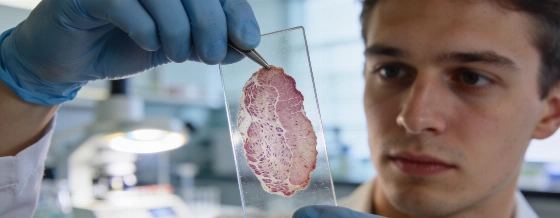
For years, scientists could not get at the molecular details inside old human tissue samples. Preservation methods kept these samples intact, but blocked modern analysis. That has changed.
The Vanderbilt method enables recovery of whole cells, not just nuclei, from FFPE samples, allowing for a more complete molecular profile than previously possible.
This new method tackles the problems caused by traditional preservation. In the past, researchers could not reach the molecular details needed to understand diseases or find new drug targets. With this approach, huge collections of human tissue can now be used for biomedical research.
A recent article in Cellular and Molecular Gastroenterology and Hepatology explains why this matters for formalin-fixed, paraffin-embedded (FFPE) samples. Before, scientists could only get cell nuclei from these samples, which meant losing a lot of data, especially RNA. The new method recovers whole cells, keeping more biological information intact.
The Vanderbilt team demonstrated their method using intestinal tissue samples that had been stored for decades, highlighting the potential of hospital archives as valuable resources for retrospective molecular research.
Vanderbilt's work is more than a technical fix. It gives biomedical researchers a new way to study disease and develop treatments. Now, samples once thought lost to time can help shape the future of medicine. The scientific community has a new tool to dig into the past and find answers that matter now.
Independent reports say the method leads to higher cell recovery and better gene detection in single-cell RNA sequencing than older nucleus-only techniques. The reviews did not give exact numbers. The main advance, according to the authors, is that "by recovering whole cells instead of only their nuclei, our method captures more of the biological information contained within each cell." This is especially valuable for old samples.
In the past, FFPE archives were hard to use for modern molecular work. Preservation damaged RNA and broke down cells. The Vanderbilt method now gives researchers a way around these problems. Decades of stored tissue could become a rich source for new biomedical discoveries.