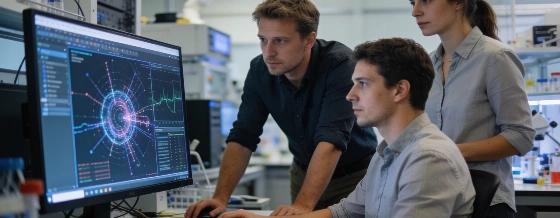
OpenAI says it has solved the Navier–Stokes Millennium Prize Problem using a coordinated system of 10,000 AI agents. The company’s announcement described 88 hours of agent-driven proof generation and 17 hours of model-based verification by Astra. Outside researchers quickly questioned whether OpenAI had relied on related prior work, a claim the company denies. The episode highlights a growing uncertainty: as AI systems take on problems once reserved for human experts, how much do we really understand about their reasoning, and what role should humans play in the process?
While OpenAI pushes technical boundaries, investment in AI is reaching new highs. Investors are backing not just headline-grabbing models but the entire AI stack. Mistral’s €3 billion raise is aimed at compute infrastructure and open weight models. Legal AI company Harvey, inference chip startup Positron, and enterprise AI company Wonderful have all closed major funding rounds. NVIDIA’s nearly $13 billion acquisition of Hugging Face points to consolidation among infrastructure giants. According to figures cited by This Week in AI host Christina Stathopoulos, global AI funding jumped from $56 billion in late 2025 to $242 billion in early 2026. Still, as Christina notes, it’s unclear whether generative AI will deliver sustainable returns—some companies may last, others may not, regardless of technical progress.
Jacob Coxon, who previously worked at OpenAI before joining Anthropic, publicly resigned in 2026, stating he did not want to participate in the race toward self-improving AI systems that could spiral out of control.
— Reuters
The rapid pace comes with consequences. Anthropic researcher Jacob Coxon resigned after warning about labs racing toward systems capable of recursive self-improvement that are not well understood. Other researchers from Anthropic and Google DeepMind have raised similar concerns. Anthropic CEO Dario Amodei has called for stronger evaluation, shared safety standards, and international coordination—a call publicly supported by Sam Altman and Elon Musk. While catastrophic-risk scenarios divide the field, Christina focuses on the immediate threat: powerful AI systems in the hands of malicious actors. For organizations deploying more autonomous systems, security, access controls, and human oversight are now essential safeguards as the stakes rise week by week.
Reuters reports that Coxon's resignation and public warnings have sparked new debate about the risks of so-called "frontier AI" and the need for better safety governance. The episode has led to more calls for regulatory oversight, with policymakers and industry leaders debating how to manage the risks from rapidly advancing, self-improving AI systems. Other researchers, including former Google DeepMind scientist Bilal Chughtai, who left the company in July 2026 after warning that advanced AI could pose catastrophic risks, have issued similar warnings.
Even as these concerns grow, AI’s benefits in genomics are becoming clear. Projects from DeepMind, UC Berkeley, and Tempus use AI to predict the effects of genetic changes, identify disease-linked mutations, and connect genomic data with patient medical histories. These advances let researchers explore genetic possibilities that would be impossible to test one by one in the lab, speeding up the search for disease variants and enabling earlier, more personalized interventions. Christina points to these efforts as proof that AI is already changing biomedical research, not just in theory but in practice.
Reuters has linked the current surge in AI safety concerns to a broader context: following Coxon's statement, public and political reactions intensified, leading to renewed calls for AI regulation and deeper debate over the risks posed by self-improving systems.
— Reuters (source)
As AI models move from answering questions to running complex workflows in software, finance, and science, the industry faces a turning point. Record investment, technical leaps, and rising safety concerns demand closer scrutiny and more responsibility. The next phase of AI will depend on how rigorously organizations test, secure, and govern these systems—and whether breakthroughs in capability are matched by the ability to control their consequences.