
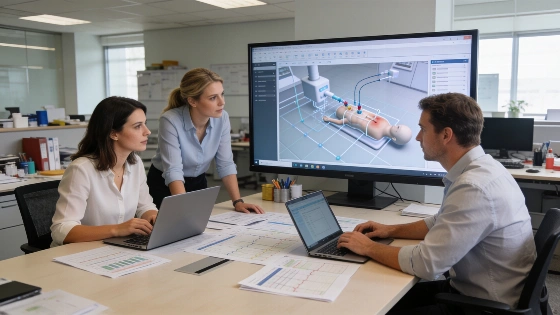
Static trial plans buckle fast when real-world enrollment veers off script. Teams facing unpredictable site performance and shifting patient pools are now leaning on AI-powered simulation to spot trouble before it hits the bottom line.
According to a TrialFill industry review, 37% of clinical trial sites recruit fewer participants than their initial target, while only 13% exceed their enrollment goals.
AI simulation brings a new playbook. Teams can model protocol tweaks and budget scenarios before launch, surfacing operational risks and likely delays early. This lets them sharpen enrollment forecasts and zero in on sites with the best shot at hitting targets, cutting down on expensive mistakes once the trial is live.
Today’s AI models for site selection dig into more than just past trial records. They scan patient prevalence and insurance hurdles, procedure counts, investigator backgrounds, and the clinical muscle of each center. This "look-alike" method can flag promising sites even if they lack a long trial track record. Still, it does not replace the need for hands-on checks of eligibility and operational readiness, as the HIT Consultant analysis points out.
For operations staff, this isn’t a theoretical shift. The move to AI simulation answers the rising complexity of trial designs and the volatility that can sink even careful plans. The biotech sector’s recent history is littered with both bold AI promises and public stumbles. Here, the focus lands on tools that actually move the needle in day-to-day trial execution.
Feasibility assessment in clinical trials is typically divided into three levels: program, protocol, and site. For reliable enrollment forecasting, it is essential to use the full set of inclusion and exclusion criteria, not just a protocol summary.
The real edge comes from adaptability. Teams can keep tuning their approach as new data rolls in, making decisions with more confidence at every stage. Rigid, one-size-fits-all planning is fading fast.
AI simulation is now a must-have for operations and feasibility teams intent on staying ahead of risk. The ability to test scenarios and pivot in real time has become standard for organizations aiming to deliver trials in a field where complexity and change are the rule.