
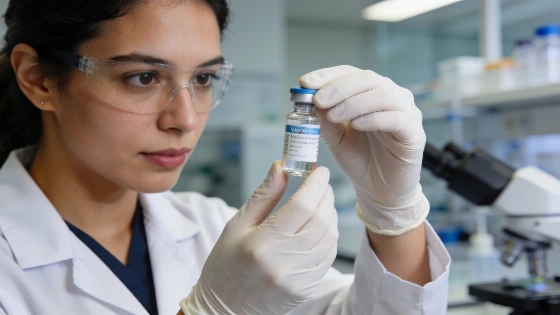
Anixa Biosciences has locked down exclusive Australian rights to its breast cancer vaccine technology through 2040. This patent gives the company a stronger grip on its intellectual property and shows its intent to lead the global push for cancer immunoprevention.
The Australian patent, number 2020221280, is titled 'Vaccine Adjuvants and Formulations' and is set to protect Anixa's technology in Australia through 2040.
The new Australian composition-of-matter patent, called "Vaccine Adjuvants and Formulations" and credited to Dr. Justin Johnson and the late Dr. Vincent Tuohy of Cleveland Clinic, adds to Anixa’s patents in the United States, Europe, China, and Japan. This wider patent coverage is more than just legal protection. It sets the stage for regulatory filings, new partnerships, and future commercial plans in major markets.
Early clinical results are starting to come in. A Phase 1 trial at Cleveland Clinic, funded by the U.S. Department of Defense, showed that Anixa’s vaccine met all main goals. The study found the vaccine was safe, well tolerated, and triggered immune responses in over 74% of people who got it. These results support further clinical work, but the vaccine is still experimental and not approved for any use, as reported in an Investing.com company news report.
No preventive breast cancer vaccine is currently approved anywhere in the world, highlighting the significance of Anixa's investigational approach and the competitive landscape for first-in-class immunoprevention.
Anixa’s business model relies on partnerships with top research centers. Its pipeline includes the breast cancer vaccine, ovarian cancer immunotherapy (liraltagene autoleucel, or lira-cel) developed with Moffitt Cancer Center, and other cancer vaccines that target "retired" proteins in common cancers. Cleveland Clinic and Moffitt Cancer Center will get royalties and a share of any commercial revenue from these technologies.
With the Australian patent secured, Anixa is setting up for a global push in cancer prevention. The plan is simple: lock down patents, prove safety and immune response in early trials, and get ready for regulatory and commercial growth. If the vaccine works in larger studies, it could change how breast cancer is prevented. For now, Anixa’s strong patent strategy and early clinical results put it at the front of a high-stakes field.