
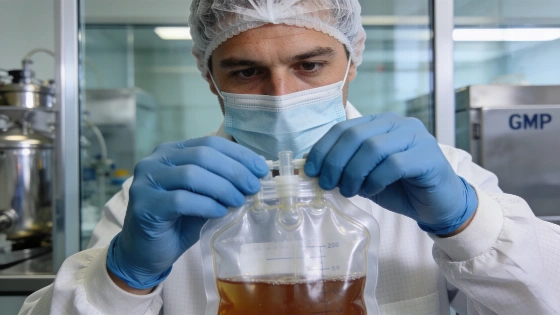
For the first time, an Australian contract manufacturer will produce a CAR-T therapy designed for solid tumours. This is a space where progress has lagged behind the gains seen in blood cancers. Cell Therapies Pty, based at Melbourne’s Victorian Comprehensive Cancer Centre, will make A-SEEDS’ ACS2015 CAR-T product for a Phase I/Ib trial. The therapy targets the EPHB4 protein in people with colorectal cancer, hepatocellular carcinoma, and bone and soft-tissue sarcomas.
Australia’s Bellberry guidance confirms that clinical trials using unapproved investigational products can proceed under the TGA’s Clinical Trial Notification (CTN) scheme, enabling faster trial startup compared to many other countries.
Australia is becoming a strong choice for early-phase cell and gene therapy trials. The country offers a solid R&D tax incentive, a diverse patient pool, and a regulatory path—the Clinical Trial Notification (CTN) route—that speeds up trial starts. Menner points out that data from Australian trials is accepted by regulators around the world. This makes Australia a good launchpad for global development. “You are embedded, you can take that data package to any regulator in the world, and it will be accepted,” she says.
But early-phase trials are just the start. Cell Therapies Pty has made products for US patients and now supports trials running in both the US and Australia. This lets sponsors think about launching in more than one market at once. For autologous therapies, where every batch is different, keeping manufacturing close and consistent is key. Menner puts it plainly: “Cell therapy is not like the rest of pharma. In autologous cell therapy you have a completely different starting product every single time, requiring an intelligent system that can adjust.”
On 22 September 2026, the Australian Government announced new grant funding from 2027–28 to bring international CAR-T clinical trials to Australia for children and young people, reinforcing the country’s commitment to cell-therapy research and access.
Specialist manufacturing partners are now essential for moving cell and gene therapy programs forward. Autologous products are complex. They need not just technical skill, but also regulatory help, testing, and logistics. Australia’s speed in Phase 1 trials, plus global acceptance of its data, puts it in a strong spot for both early and later-stage work. For those focused only on cost, China is still an option. But for programs aiming for global reach, the Australian approach is gaining ground.
Automation and digital tools are set to change how CAR-T therapies are made. Menner says about 70% of the cost comes from human labor. Cutting that in half with machine learning and AI could make these treatments much more affordable. Still, she warns, “you cannot take the human out entirely. When something goes wrong mid-batch, a machine cannot diagnose it.” The future will be a mix: automation to boost human capacity, but with people ready to step in when needed.
As cell therapy moves into autoimmune diseases and earlier treatment lines, bottlenecks in apheresis and collection will get worse. Menner suggests using existing resources like the Australian Red Cross Lifeblood and transplant centers, instead of building new wards. Overseas models for home treatment and decentralized delivery could also help, easing the load on hospitals and cutting costs for patients.
These changes echo new science, like recent research into making solid tumours more open to CAR-T attack. The global race is on to break through the barriers that have held cell therapy back.
Australia’s rise as a hub for cell therapy manufacturing and trials is no accident. It comes from steady investment in infrastructure, flexible regulation, and a willingness to work across borders—shown by the A-SEEDS and Cell Therapies Pty partnership. If the sector can deliver on automation, collection, and new delivery models, long-term survival stories that once seemed rare could become common. The industry should pay attention: cell therapy innovation is shifting, and Australia is making its move.