
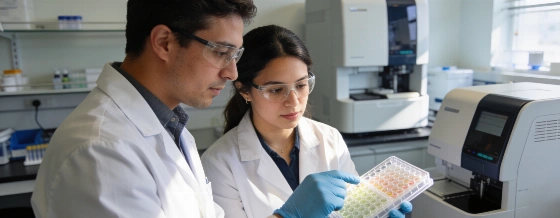
BioCytics is turning to detailed molecular profiling to advance its personalized cancer therapies. The company has hired Eremid Genomic Services to perform single-cell transcriptomic (scRNA-Seq) and TCR sequencing on its main immune cell candidate, with the goal of closely analyzing both precursor and expanded immune cells before they are used in patients.
Eremid Genomic Services is both CLIA-certified and CAP-accredited, underscoring its commitment to high-quality genomics research for clinical and research clients.
Eremid will use scRNA-Seq to provide a detailed molecular profile of the immune cells' state and readiness. TCR sequencing will help BioCytics track how the cells expand and reactivate, and check the consistency of the manufacturing process across different patient samples. Dr. Renaud Warin, BioCytics' Chief Scientific Officer, says transcriptomics is central for understanding changes in cells, both at the broad level (such as gain or loss of function) and at the detailed level (mechanisms of action), as well as for cross-checking results seen in lab studies.
BioCytics expects the first results to include an analysis template that will be used during clinical rollout. The company plans to use these molecular findings not only to confirm cell readiness, but also to improve prediction models for anti-cancer response based on each patient's immune profile. Eremid's Chief Business Officer, Julian Abery, describes the study as "ground-breaking" and points to the potential of transcriptomics to improve patient outcomes through personalized medicine.
Single-cell RNA sequencing (scRNA-Seq) is increasingly used in cell therapy research to assess the heterogeneity and functional state of rare cell populations, while TCR sequencing enables tracking of T-cell clonality and immune response dynamics. This reflects a broader industry trend toward more granular molecular characterization in immunotherapy development.
This partnership marks a shift in how cell therapy developers approach product characterization and quality control. Instead of relying on surface markers or bulk assays, BioCytics is requiring single-cell level evidence of function and stability before moving to clinical use. Combined with Eremid's technical expertise, this approach could set a new standard for validating next-generation immune cell therapies for solid tumors, if the data support its promise.