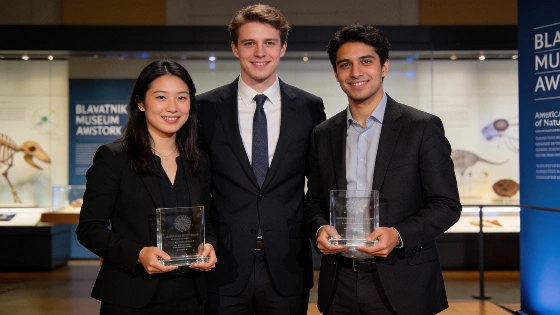
Patrick Hsu, David Nagib, and Jonathan Rivnay just joined a rare club. Each has won a $250,000 Blavatnik Award for research that is already changing gene editing, organic chemistry, and bioelectronics. Their names are now on the global radar.
The Blavatnik Awards always draw attention. They are announced the same week as the Nobel Prizes. Many in science see them as a preview of who might win a Nobel next. Most Nobel winners made their mark early. The Blavatnik list often points to the future.
In 2026, the Blavatnik National Awards selected three winners from a pool of 18 finalists, all under the age of 42 and working in the United States.
Breakthroughs in gene editing, chemistry, and bioelectronics
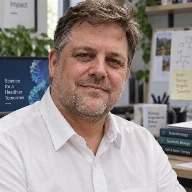
Patrick Hsu is a professor at Stanford University School of Medicine. He won in the life sciences for his work on CRISPR-Cas13 gene scissors. Hsu’s tools let scientists cut and paste genetic material with precision. This opens the door for new gene therapies for rare and deadly diseases like sickle cell disease and Friedreich's ataxia. Hsu’s career took off fast. He earned his doctorate from UC Berkeley at 21. By 23, he was leading a research group at the Salk Institute. In 2024, Hsu published Evo, a generative AI that predicts and creates gene variants. Science put it on the cover. Stanford Medicine reports that Hsu is also part of the nonprofit Arc Institute. He was honored for programmable genome editing tools and a large-scale machine learning model for genome analysis.
David Nagib, a chemistry professor at Ohio State University, won for his radical and carbene-based methods to activate inert carbon–hydrogen bonds. This lets chemists build and change complex molecules, including drugs, in new ways. Nagib’s 2024 study on radical polarity classification became the most-read paper in the Journal of the American Chemical Society that year. His approach is changing organic synthesis. Nagib is the first Ohio State faculty member to win the national Blavatnik Award. His methods help speed up the search for better, longer-lasting drug candidates, as detailed by Ohio State University.
Jonathan Rivnay of Northwestern University took the physics and engineering prize. His work is in bioelectronics. Rivnay develops materials and devices that connect directly with living tissue. One project: a “living pharmacy”—an implantable device that makes and delivers biopharmaceuticals inside the body. He wants to enable real-time, personalized therapy for chronic diseases. His bioelectronic platforms can sense and respond to changes in the body. Rivnay is a professor of biomedical engineering and materials science. The American Chemical Society reports that his research centers on bioelectronic materials and devices that interact with living cells and tissues.
The Blavatnik Awards and their influence
The Blavatnik Awards for Young Scientists started in 2007. The Blavatnik Family Foundation funds them. The New York Academy of Sciences runs the program. The awards go to top researchers age 42 or younger. The 2026 ceremony was held at the American Museum of Natural History in New York. Each winner got $250,000 in unrestricted prize money. The three national prizes came from a tough field of 18 finalists, according to the American Chemical Society.
The awards single out work in life sciences, chemistry, and physics. They have become a launchpad for scientific careers. The money and global attention help these researchers push their work further at a key moment.
Patrick Hsu's Blavatnik Award is intended to accelerate the development of molecular DNA rewriting tools and AI models capable of identifying disease-causing mutations.
Now, with Hsu, Nagib, and Rivnay on the list, the Blavatnik Awards have again spotted talent before the rest of the world. The science community pays close attention. Past winners often go on to win Nobels. For biotech, this means more bold ideas and technical leaps from a new wave of innovators. Their work is already shaping medicine and technology. Watch this space.