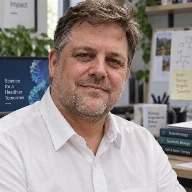

Families living with Hutchinson-Gilford Progeria Syndrome have seen hope move from distant promise to real progress. The Progeria Research Foundation (PRF) plans to honor two key drivers of that change: gene-editing scientist David R. Liu, Ph.D., and longtime local supporters Cathy and Dave Gravel, at its 2026 Night of Wonder Gala in Boston.
The Westin Boston Seaport Hotel will host the event on November 14. PRF will present the S.A.M. Award for Science & Medicine and the Amy Award for Spirit & Service. These awards recognize both scientific breakthroughs and the steady support that keeps research moving. Hutchinson-Gilford Progeria Syndrome, caused by a single mutation in the LMNA gene, leads to abnormal progerin production and rapid aging in children. According to O Tempo, this rare disease affects about one in every 4 million births. Only around 400 children and young adults worldwide are living with Progeria.
Patients with Hutchinson-Gilford Progeria Syndrome face a markedly shortened lifespan, with an average life expectancy of about 13 years due to elevated risks of atherosclerosis and cardiovascular complications.
Base editing and the path to a genetic cure
David R. Liu, Ph.D., will receive the S.A.M. Award, named for Sam Berns, whose story inspired PRF’s founding. Liu invented base editing, a technology often compared to a DNA “spell check.” His lab’s work allows for precise correction of the mutation that causes Progeria. As part of PRF’s Progeria Gene Team, Liu has helped push this approach from theory to the edge of clinical use. The SamPro-2 gene therapy, now moving toward human trials, is a direct result of this partnership. Still, independent sources confirm only that base-editing technologies are advancing in clinical development; there is no public record yet of SamPro-2 entering human trials or receiving regulatory approval.
Liu’s background is extensive. He is the Richard Merkin Professor and director at the Broad Institute of MIT and Harvard, Thomas Dudley Cabot Professor at Harvard University, a Howard Hughes Medical Institute investigator, and a member of both the National Academy of Sciences and the National Academy of Medicine. His recent honors include the 2025 Breakthrough Prize in the Life Sciences, the 2026 Harvey Prize, a spot on the 2025 TIME100 Health list, and the 2026 Washington Post Next 50. “A single genetic mutation is stealing their time, and until recently we had no way to correct that at its source,” Liu said. “It’s been one of the privileges of my career to work alongside PRF on a precision editing approach designed to fix that mutation directly and permanently.”
Base editing, developed in Liu’s lab, is now one of several gene-editing tools being tested in more than 25 clinical trials for rare genetic diseases, cancers, and other conditions, according to the Broad Institute. The institute notes that these precise gene-editing methods, developed with NIH support, could open the door to new genetic therapies for patients with rare diseases.
Community backbone and the spirit of service
The Amy Award, named for Amy Foose, will go to Cathy and Dave Gravel. Their support for PRF goes back over 20 years. As founders of GraVoc, an IT firm in Peabody, the Gravels have made giving back part of their family and business. Cathy first got involved in 2013, helping with a city hall premiere of “Life According to Sam.” Since then, the Gravels have only deepened their commitment. When PRF wanted to make a Red Sox dream come true for Niccolo, a young adult with Progeria visiting from Italy, Dave arranged a full VIP day at Fenway Park. That hands-on approach has become a hallmark of their support.
Lonafarnib, the first FDA-approved treatment for Progeria, can improve survival but is not a cure. A 2025 GeneReviews summary cited in Newsbomb.gr reports that average survival is about 14.5 years without lonafarnib and 18.7 years with treatment.
“What keeps us engaged is the kids—their humor, their honesty, the way they take on things most adults couldn’t, and the tremendous progress PRF is making,” Cathy said. Dave added, “You go to one of these events expecting to help, and you leave realizing how much these kids have given you instead.”
Night of Wonder and the future of Progeria research
Night of Wonder is more than a gala. It is PRF’s main engine for raising money to fund research and the search for a cure. The foundation, started by Sam Berns’ family after his diagnosis in 1999, has already helped discover the gene mutation behind Progeria and supported the first FDA-approved treatment, lonafarnib. Now, with gene-editing tools like base editing on the horizon, the push for a cure is gaining speed. The event is set for November 14, 2026, from 6:00 p.m. to midnight at the Westin Boston Seaport District Hotel. More details are available at www.progeriaresearch.org/night-of-wonder-2026.
PRF’s work brings together top-tier science and strong community ties. This dynamic is echoed in the growing excitement around gene-editing breakthroughs in the wider scientific world. As PRF moves forward with its Path to Cure Progeria program, the recognition of both lab innovators and grassroots supporters shows how technical progress and human connection go hand in hand. This year’s Night of Wonder sends a clear message: the future of rare disease research will depend not just on the next scientific advance, but on the people who stand with these children every step of the way.