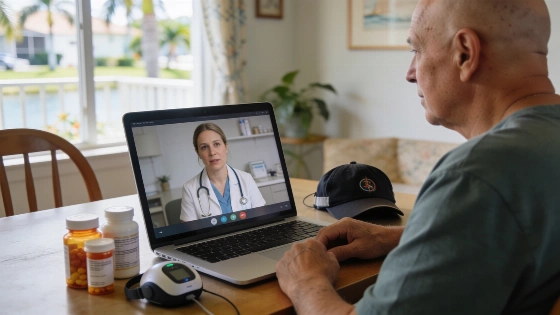
For Michael Hugo, getting into a clinical trial meant the difference between life and death. After a seizure in 2022, doctors told him he had stage 4 glioblastoma. He went through surgery, radiation, and chemotherapy. Only then did he manage to join two research studies. The process was tough. Hugo ran into problem after problem—he didn’t know about the trials, had to deal with travel and paperwork, and faced hurdles that would have stopped many others. Now, Hugo is doing well with the help of a wearable cap that delivers Tumor Treating Fields. He travels to Washington, D.C., as a patient advocate, determined to call attention to the urgent need for better access to clinical trials.
A recent industry analysis found that only around 48% of real-world cancer patients are clinically eligible for trials, highlighting how restrictive eligibility criteria can exclude many before enrollment even begins.
Clinical trials drive progress in cancer care. They give patients a chance to try new treatments and help build the evidence needed to improve care. Stephen D. Nimer, M.D., director of Sylvester and executive dean for research at the University of Miami Miller School of Medicine, put it plainly: “We’re committed to being the most patient-centric cancer center in the world.” Dr. Nimer said the center must listen to the community: “We need to hear directly from the people we serve, what matters to them, what barriers they face and how we can better meet their needs.”
At the retreat, talk quickly shifted from big ideas to the real problems patients face. Jonathan Trent, M.D., Ph.D., and Lara Traeger, Ph.D., pointed to research at Sylvester on symptom management, palliative care, and quality of life—areas where trials can make a real difference. The numbers tell the story: in 2025, more than 6,000 people took part in 520 studies at Sylvester. Over 800 patients joined interventional treatment trials. Still, leaders at the center know that not everyone in South Florida’s diverse communities is getting the same chance to take part.
Community oncology data presented in September 2026 revealed that 60% of surveyed community oncologists and 50% of practice administrators reported limited clinical trial enrollment options, highlighting persistent gaps between innovation and implementation in cancer care.
Matthew Schlumbrecht, M.D., M.P.H., laid out the obstacles: not enough information, language barriers, trouble with transportation, insurance problems, out-of-pocket costs, time off work, family duties, and deep mistrust of the medical system. Even the rules for joining a trial can quietly shut people out. “If we write the eligibility criteria so strictly, we automatically rule people out,” Dr. Schlumbrecht said. Sylvester is now reviewing its requirements for things like controlled HIV, hepatitis history, kidney function, and nutrition to see where they can open up access without risking safety.
Some fixes are already in place. Sylvester is making information available in more languages, offering telehealth visits, delivering medicine to patients’ homes, and doing blood draws at home. These steps are meant to meet patients where they are. The center is also working with community health navigators, primary care doctors, and trusted organizations to help patients learn about trials earlier—before treatment decisions are made and while there’s still time to look at all the options.
Patient advocates and community leaders kept the conversation grounded. Rosemary Carrera, Tracy Milgram, Nancy Antoine, and Erin Williams—all cancer survivors and leaders—stressed the need for trust, clear communication, and education. Erin Kobetz, M.D., M.P.H., said that talks about clinical trials often happen when patients are already overwhelmed by a new diagnosis. Carrera didn’t sugarcoat it: “There’s going to be loss in translation, what the doctor is saying versus the intention of what’s being said.”
Juan Pablo Alderuccio, M.D., listened closely and took notes to improve his own international clinical trial. Everyone agreed: patients need solid information and support before they have to make quick decisions. Community health navigators and trusted groups aren’t just helpful—they’re essential for closing the gap between research and what patients actually need.
For Sylvester’s leaders, opening up clinical trials isn’t just about getting more people to sign up. As Dr. Kobetz said, the retreat was a chance to “maximize clinical research and extend the benefit of new discoveries to all communities.” The stakes are high. As new treatments come out, the only way to make sure every patient benefits is for researchers, doctors, patients, and community groups to work together, again and again.
The message is clear: the future of cancer care depends on breaking down the barriers that keep patients out of clinical trials. Sylvester Comprehensive Cancer Center is taking real steps—multilingual outreach, telehealth, home-based services, and changing eligibility rules—but there’s still a long way to go. The real test will be whether these changes lead to fairer access and better results for every patient, not just the lucky few who manage to get through the system. That’s how progress in cancer research should be measured now.