
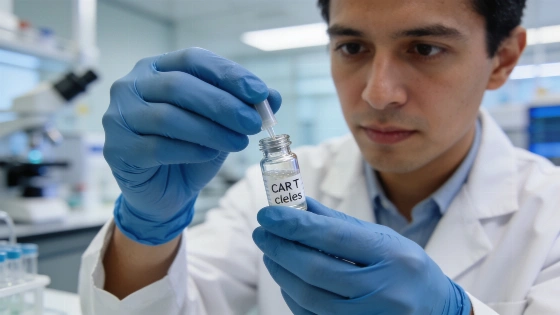
The FDA has, for the first time, cleared a clinical trial for a CAR-T therapy built to attack two proteins—B7-H3 and IL-8—on solid tumors. The trial will enroll adults with advanced colorectal cancer and children with solid tumors who have no other standard treatment options left.
CAR-T therapies have historically been used mainly in blood cancers, making this trial a notable step toward expanding cell therapy into the realm of solid tumors.
Michael Verneris, professor of pediatric oncology at CU Anschutz and program co-leader of Tumor-Host Interactions, explained the thinking behind the therapy. "This is a very different way of thinking about how we treat cancer. We wanted to find targets that are present across many different cancers rather than developing a therapy that would only apply to a small number of patients."
The approach is straightforward. B7-H3 is found on most colorectal cancers. IL-8 is linked to tumor growth, inflammation, and spread. By making CAR T-cells that can spot both, the team hopes to get past the resistance that has blocked cell therapies in solid tumors. A BioWorld report says the first adult group will include people with treatment-resistant colorectal cancer. The pediatric group will enroll children with solid tumors who have run out of standard options.
Independent trade coverage confirmed that the FDA cleared CU Anschutz to run the trial, with the clearance being reported contemporaneously in mid-September 2026 and the study expected to start in December.
With this FDA clearance, the University of Colorado Anschutz is moving to the front of a new push in cell therapy. The choice to go after targets found in many tumors, instead of just one cancer type, marks a practical change in the field. This could help CAR-T therapies reach more patients. If the trial works, it could change what cell therapy can do for solid tumors. For now, the field is watching as this new approach moves from the lab to the clinic. More details are in the official CU Anschutz announcement.