
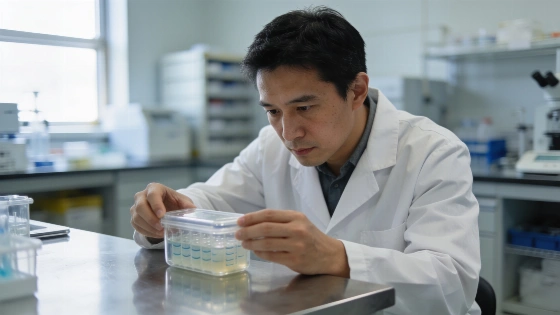
CaseBioscience is now part of a team set to receive up to $7.3 million from ARPA-H. The goal is clear. They want to break the old rules of cell therapy storage. Cryogenic freezers have always been the standard. That could change soon.
The ARPA-H BioStabilization Systems (BoSS) program is targeting a dramatic shift from cryogenic storage at around −196°C to room temperature storage near 21°C for cell-based biologic medicines.
Industry context and what’s at stake
This ARPA-H grant puts CaseBioscience among a handful of companies racing to fix the biggest pain point in cell therapy logistics. Cryogenic storage drives up costs. It also blocks access in places without advanced cold-chain systems. Room-temperature preservation could open new markets. It could also make delivery faster and less risky for fragile, time-sensitive treatments.
An official ARPA-H announcement on 25 September 2026 named CaseBioscience as part of a Draper-led group. The team includes Likarda, CPSI Biotech, OFC Life Sciences, UC Boulder, Fresenius Kabi, and MiNK Therapeutics. The BoSS program is putting up to $87 million over four years into four teams. The aim is to build technology that lets companies make, store, and ship cell-based medicines at room temperature.
ARPA-H describes the cold-chain barrier as a major reason biologics remain hard to distribute broadly, citing logistical constraints in the cold supply chain as a significant barrier to innovation and access for most Americans.
Competition and commercial outlook
Money and deals keep flowing into cell therapy. But storage and shipping are now the real battleground. The $7.3 million ARPA-H ceiling shows both the promise and the risk. New preservation tech is hard to get right. This is not like the recent Zymeworks buyout, which was about growing a drug portfolio. CaseBioscience is betting on a technical breakthrough.
ARPA-H’s support gives the team a shot to prove that room-temperature storage can work in the real world. If they pull it off, cell therapy could get cheaper and easier to use. Logistics giants may have to adapt. The industry is watching. The outcome will show if cell therapies stay locked in freezers or finally break out.