
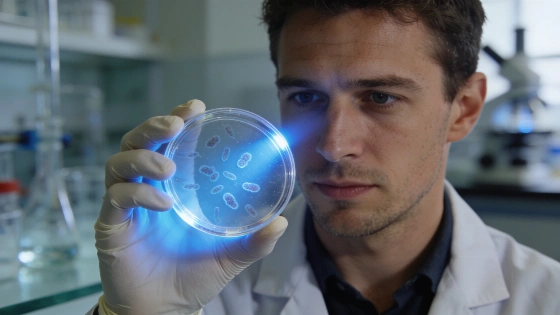
Stockholm, October 5, 2026. The Nobel Assembly named Karl Deisseroth, Peter Hegemann, and Georg Nagel as this year’s Nobel Prize winners in Medicine. The award recognizes their discovery of light-gated ion channels and the invention of optogenetics. This technology lets scientists use light to control living cells with extreme precision. The news broke at the official ceremony, as covered by CNN coverage of the Nobel Prize.
The Nobel Committee described optogenetics as a method that enables scientists to turn the activity of individual nerve cells on or off in the living brain with light.
From algae to brain cells
The discovery did not stop with algae. Scientists put the channelrhodopsin gene into other cells. These cells could now respond to light and create electrical signals. This proved that light could control living cells. It set the stage for optogenetics. As India Today's Nobel Prize report explains, finding channelrhodopsin in single-celled algae was key. It made it possible to adapt the method to nerve cells.
Optogenetics emerged from transferring the channelrhodopsin gene into mammalian neurons, and later enabled researchers to control neural activity in mouse brains with high temporal precision.
Scientific impact and editorial perspective
The Nobel Committee’s choice is clear. Optogenetics is now a core tool in biology. Deisseroth, Hegemann, and Nagel gave scientists a way to probe the brain’s secrets. Their work set a new standard for research methods. Light-driven cell control has already changed neuroscience labs. It is now being tested for future therapies. This award marks a turning point. The era of precise, light-based cell control has arrived.
The 2026 Nobel Prize in Medicine comes with 12 million Swedish kronor, or about 1.2 million US dollars. KSAT's Nobel Prize reporting details the prize. The Nobel Committee noted that optogenetics is now used worldwide to study brain function. It is also being tested in clinical research, including work to restore vision in people with sight loss.