
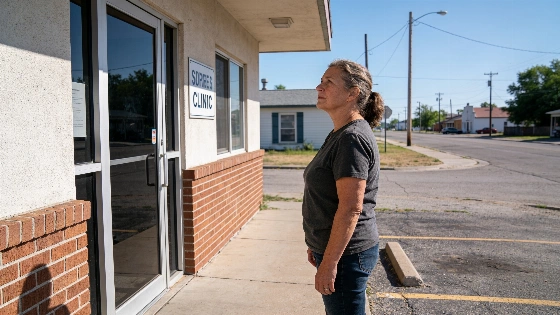
Rural voters keep waiting for real change. The latest KFF-Associated Press poll shows many in small towns support the Make America Healthy Again movement. But when asked about results, most say the health policies have not made a difference where they live.
Sarah Jane Tribble, chief rural correspondent for KFF Health News, took these numbers to NPR’s Morning Edition. She joined Ali Swenson and Linley Sanders from the Associated Press. Their reporting found that rural MAHA supporters are still waiting for Trump-era health plans to reach their communities. The promised improvements have not arrived.
According to an AP/KFF poll conducted in August 2026, about half of rural voters identify with the MAHA movement, but nearly 80% say Trump administration health policies have had little or even negative impact on their communities.
National promises, local doubts
The Make America Healthy Again movement has built up political energy. But the poll points to a stubborn gap between what leaders promise and what rural people see. In the rural part of the survey, 2,241 registered voters from across the U.S. took part between August 12 and 24, 2026. The margin of error was ±3 percentage points, according to the Iron Mountain Daily News. Tribble’s reporting makes it clear: rural residents hear the talk, but they do not see better access or outcomes. The gap is real. It raises doubts about whether national health plans can actually help people in small towns.
Other health policy stories are also making headlines. Céline Gounder, KFF Health News’ editor-at-large for public health, spoke on CBS News’ CBS Mornings about a new GLP-1 weight loss drug. She also discussed health secretary Robert F. Kennedy Jr.’s comments at a recent MAHA summit. On CBS News 24/7’s The Daily Report, Gounder talked about how Anthropic’s Claude agents could speed up gene-editing technology.
Rural health programs seek real results
Renuka Rayasam, senior correspondent at KFF Health News, joined WUGA’s The Georgia Health Report to talk about the Rural Health Transformation Program. This program, along with KFF Health News’ Rural Health Payout series, keeps the focus on what rural communities need. Slogans are not enough. People want to see real improvements in care.
On October 1, 2026, CMS announced nearly $55 million in new federal funding for Alabama through the Rural Health Transformation Program, specifically aimed at strengthening the rural healthcare workforce and expanding access to maternal, emergency, and preventive care.
Rural Americans want action, not just promises. Enthusiasm for MAHA is high, but that does not close the gap between policy and daily life. Until national health movements deliver real change in small towns, rural voters will keep asking tough questions. They have good reason.
Some federal steps are starting to address these problems. On October 2, 2026, the Centers for Medicare & Medicaid Services (CMS) announced $7.2 million for 25 projects in South Dakota. The money will upgrade emergency medical services and telemedicine for urgent care. This is a shift toward action. More grants went to Arkansas ($54.6 million), Delaware (almost $23 million), and $51 million for chronic disease prevention and nutrition programs. Details are in the CMS MLN Connects newsletter.