
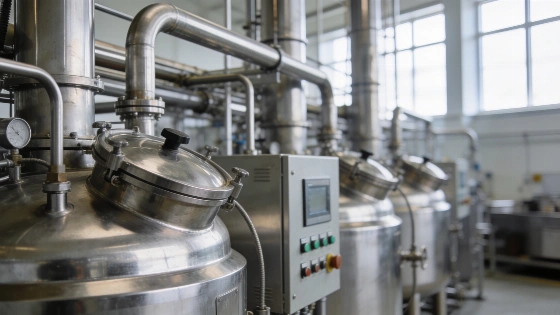
Forklifts and contractors have been a constant presence at SD Guthrie International’s Liverpool site this spring. The company has brought two enzymatic interesterification lines online, shifting its UK operation toward more specialized, locally made palm-based fats for food manufacturers. The move puts new process tech at the heart of the plant, with management betting on both efficiency and a smaller environmental footprint.
Each line can turn out up to 20,000 tonnes a year. The site now runs with extra storage tanks, a new loading bay, a weighbridge, and a revamped effluent treatment plant. The enzymatic interesterification process itself swaps out harsh chemicals for enzymes, letting the plant rearrange fatty acids under gentler conditions. SD Guthrie claims this setup cuts effluent and skips post-treatment, but the company hasn’t published third-party data on actual reductions or operational trade-offs.
SD Guthrie International, formerly known as Sime Darby Oils, employs over 120 staff at its Liverpool site on Regent Road near Huskisson Dock.
Richard Town, chief operations officer for manufacturing, says the new lines let SD Guthrie tailor palm-based fats for everything from spreads and margarines to bakery and confectionery fillings. Food producers can now source fats with specific melting points or textures, made in the UK and delivered on shorter timelines. The company is pitching this as a win for both product performance and local supply chains.
President and group CEO Mohd Haris Mohd Arshad calls the EIE facility a platform for "more precision and more possibilities." He ties the investment to SD Guthrie’s ‘Beyond Zero’ sustainability push, arguing that local production will shrink the carbon footprint for UK buyers. The company is positioning the Liverpool plant as a lever for both market agility and environmental claims, though the actual emissions savings depend on logistics and customer uptake.
SD Guthrie is steering its downstream business away from bulk palm oil and toward higher-value fat systems. The new lines slot in alongside existing production and fit the company’s broader plan to use process tech for more specialized products. The group’s portfolio already covers palm oil derivatives like oleochemicals and biodiesel, with operations in Malaysia and Indonesia as well as Papua New Guinea and the Solomon Islands.
The expansion project includes not only the new production lines but also additional storage tanks, a new loading bay, a weighbridge, and an upgraded effluent treatment plant to support increased capacity and sustainability goals.
By doubling down on enzymatic processing and local output, SD Guthrie is chasing demand for fats that meet both technical specs and sustainability targets. The Liverpool upgrade shows how targeted investment in process equipment can shift both operational efficiency and environmental claims in industrial biotech.
A report by TheBusinessDesk.com puts the combined rated capacity of the new lines at up to 40,000 tonnes a year, a major boost for the site’s output.
Financials from a Liverpool Business News review show SD Guthrie International’s UK revenue rose 2.7% to £265.4 million for the year ending 31 December 2025. Pre-tax profit dropped from £23.8 million to £19.4 million. These numbers cover the full UK business, not just Liverpool.