
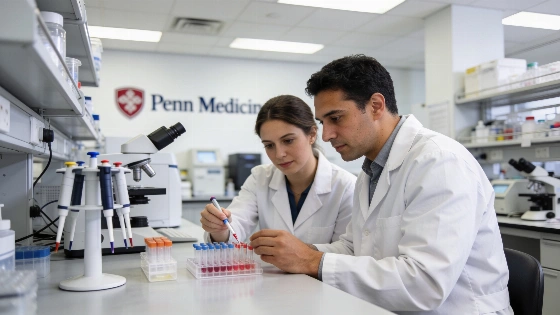
Construction crews and lab planners at Penn Medicine have started work on a new research hub, fueled by a $25 million donation from the Smilow Foundation. The Smilow Center for Precision Therapeutics will focus on gene editing and targeted treatments for cardiovascular disease, with the goal of moving beyond symptom management to root-cause cures.
William Smilow leads the foundation behind the gift. The Smilow name already marks Penn’s Center for Translational Research and an endowed professorship. Smilow’s personal history with heart disease shapes the foundation’s priorities. He said, “The creation of the Smilow Center for Precision Therapeutics reflects our commitment to advancing the science needed to cure heart disease and spare future generations from its impact.”
Recent search results indicate that while gene editing is a rapidly evolving field in cardiovascular medicine, there are currently no independent publications confirming the launch or operational status of the Smilow Center for Precision Therapeutics.
Thomas P. Cappola, MD, ScM, the William Smilow Professor and Division Chief of Cardiovascular Medicine, will oversee the center. His team will pull in specialists from cardiovascular medicine and systems pharmacology, as well as bioengineering and radiology. The plan is to build on Penn’s gene editing track record. Kiran Musunuru, MD, PhD, MPH, ML, MRA, has already developed gene-editing therapies to permanently lower cholesterol. Drew Weissman, MD, PhD, helped pioneer mRNA technology. Both will play key roles in the center’s work.
Jonathan A. Epstein, MD, Dean of the Perelman School of Medicine, called the Smilow Foundation’s gift “an extraordinary commitment to advancing groundbreaking research with the potential to achieve what was once considered impossible: curing previously debilitating forms of heart disease.” J. Larry Jameson, MD, President of the University of Pennsylvania, credited William Smilow with helping Penn turn scientific discoveries into real treatments.
The center’s mandate is to speed up the move from lab discovery to first-in-human clinical trials. Penn wants to become the top destination for cardiovascular translational research. Michael Parmacek, MD, Chair of the Department of Medicine, said the center will create new scientific and clinical capabilities, not just expand what’s already in place.
The Smilow Foundation’s reach goes beyond Penn. It has funded Yale’s Smilow Cancer Hospital and New York University’s Langone Medical Center. The foundation also helped launch the Smilow Woodland TGR Learning Lab in West Philadelphia. William Smilow sits on the Penn Medicine Board and other leadership councils, giving the foundation a direct hand in shaping research priorities.
Despite the growing interest in gene editing for cardiovascular disease, recent search findings show no independent data on specific therapeutic developments, clinical trial timelines, or regulatory approvals linked to the Smilow Center for Precision Therapeutics.
Gene editing’s rapid evolution keeps the field in flux. The Smilow Center’s launch marks a new phase for Penn’s ambitions in curative therapies. The center’s push for cross-disciplinary work and fast clinical translation puts institutional philanthropy to the test in biomedical innovation. This move lands alongside other milestones in gene editing, including those reported earlier in the sector.
Penn Medicine’s $25 million investment, powered by the Smilow Foundation, targets the infrastructure and talent needed to bring gene editing from the lab to the clinic. The center’s operational focus is on building the machinery for real-world patient impact. The launch date sets Penn’s position in the national race for cardiovascular breakthroughs.