
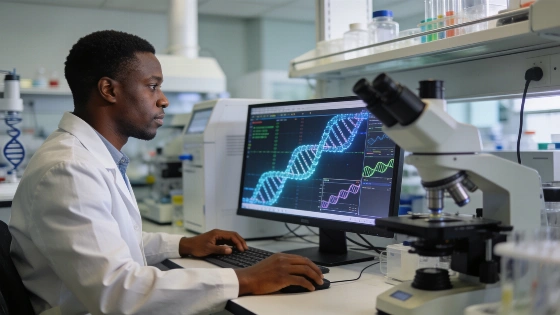
In African research labs, the numbers keep climbing. Genomic data pours in by the millions. But raw data alone does not change lives. Wafaa Rashed, who leads the Pan-African PGS Education and Research Initiative, puts it plainly. Africa needs more than numbers. It needs sharp analysis and local voices at the table. Policy must be built by Africans, for Africans.
African genomic data remains significantly underrepresented in global databases, raising concerns about data sovereignty and the need for local infrastructure.
Abdallah’s answer is clear. Bioinformatics sorts, processes, and makes sense of complex genomic data. Biostatistics tests which results hold up and which do not. These fields drive disease tracking, genetic screening, and public health plans. Without them, data is just noise.
But Abdallah goes further. He says equity and real representation must be at the core of Africa’s genomics policy. Are African people truly included in global databases? Do genetic tests work for all groups on the continent? Are African scientists and communities making decisions about their own data? These are not just theory. They decide who benefits—and who gets left out.
The World Health Organization has developed a genomics costing tool to help countries budget for routine sequencing and bioinformatics, covering everything from infrastructure and reagents to workforce and quality assurance.
This push for local control is not unique. Other big genomics projects have hit roadblocks, as seen in recent gene editing delays. The lesson is simple. Without strong methods and local context, even the best data can stall.
Rashed and Abdallah are not asking for handouts or token seats. They want a future where Africa builds its own expertise, sets its own rules, and forms real partnerships. The next leap in African genomics will not come from more data alone. It will come from building skills, setting ethical standards, and working together. That is how policy becomes real. That is how it serves the people who need it most.
A recent expert review found that next-generation sequencing (NGS) infrastructure in Africa grew quickly after COVID-19. But real progress is still blocked by funding gaps, too few trained staff, and not enough bioinformatics know-how. The review makes it clear: biostatistics and bioinformatics are not optional. They are the tools that turn big data into real health policy. Rashed and Abdallah’s arguments stand on solid ground.
South Africa shows how tough the rules can be. The Protection of Personal Information Act (POPIA) tightly controls how sensitive data is used in research. It usually bans processing special personal data, except for research, statistics, or history. Sending medical data across borders may need approval from the Information Regulator. The National Health Research Ethics Council explains why strong data rules matter for African genomics. The stakes are high.