
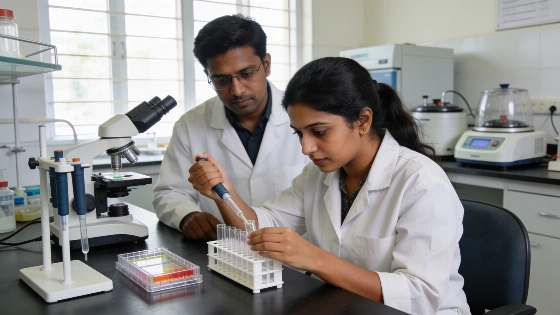
On 21 September 2026, fifteen scientists arrived at the Hebbal campus of ICAR–National Bureau of Agricultural Insect Resources (ICAR-NBAIR) in Bengaluru. They came from seven states. Their goal was clear. They wanted to master the latest molecular biology and bioinformatics tools for insect research. The training ran for ten days. It was not a routine workshop. ICAR-NBAIR set out to give these researchers the skills needed for modern genomics and better pest control.
The programme mixed theory with real lab work. Participants learned how to isolate DNA and RNA. They practiced PCR, LAMP, and RPA. These are core methods in genetic work on insects. The bioinformatics part went further. Attendees explored databases, ran sequence analysis, edited genetic data, submitted sequences, designed primers, and worked on phylogenetic analysis and genetic distance. The aim was simple. Every scientist left with skills they could use right away in their own research.
In late September 2026, ICAR–NBAIR hosted a visit by Dr Yashpal Singh Malik, DDG (Agricultural Education), who reviewed the institute’s National Insect Museum and Insect Biosafety Laboratory, confirming active scientific and HRD engagement at the campus during the training period.
Integrating molecular tools into insect research
Lectures and live demos were paired with hands-on sessions. Researchers tried out new techniques on their own projects. This approach closed the gap between theory and fieldwork. It helped them bring molecular biology and bioinformatics into their work on insect identification, genomics, and pest management.
The effects go beyond the classroom. ICAR-NBAIR is giving scientists the tools for more precise and sustainable pest control. The skills learned here will speed up insect genomics research. They will help India move toward pest management based on real evidence, not guesswork.
ICAR’s broader strategy in 2026 included scaling up applied research on safer, sustainable alternatives to chemical pest control, as seen in its collaborations to develop non-chemical fumigation methods for storage pests in wheat and rice.
ICAR-NBAIR is focused on building capacity in agricultural genomics. Targeted, practical training is the key. It turns advances in molecular biology into real results for farmers. Pest management is getting tougher. These efforts are now essential for sustainable agriculture in India.
The ICAR official portal says the institute’s mandate covers insect resources, germplasm conservation, use, and biosafety. All of these connect directly to the molecular training given here. ICAR continues to push genomics and biosafety as top priorities for agricultural research, as recent reports show.
Momentum is building. A report from late September 2026 described how ICAR–NBAIR used genomic tools to study evolutionary links in mites. This is part of a bigger push for advanced diagnostics and resource conservation using molecular methods.