
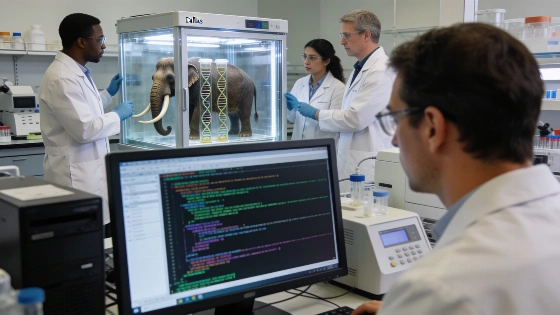
Colossal Biosciences has run into a wall. The company now admits its 2028 target for bringing back the woolly mammoth was never realistic. Their Dallas team, once sure of their gene-editing plan, faces deeper scientific problems than they first thought.
Colossal’s public timeline had previously pointed to 2028 for woolly mammoth calves, but this benchmark has now been officially delayed.
The company’s approach starts with DNA from a mammoth found in Siberia in 2018. Using CRISPR and AI, Colossal mapped the genetic code differences between elephants and mammoths. They even found genes for traits like ear size. This isn’t just theory. Colossal has bred 38 “woolly mice” that carry mammoth hair genes. It’s a real test of their editing skills.
But moving from mice to mammoths is a much bigger leap. It’s proving harder than Colossal’s earlier work on the dire wolf, which they say they de-extincted in 2025. The mammoth project is bigger and more tangled. The company has had to reset its own expectations. So have people waiting to see Ice Age giants walk again.
Colossal was founded in 2021 by entrepreneur Ben Lamm and geneticist George Church, and the mammoth remains the company’s flagship de-extinction project alongside work on the dodo, Tasmanian tiger, and moa.
Even with the delay, Colossal keeps pushing the limits of genome editing and synthetic biology. The company’s choice to publicly revise its timeline is rare in a field often full of hype. The early 2030s are now the new target for the mammoth’s return. But the real story is the stubborn complexity of rewriting nature’s code. One thing is clear. In de-extinction, ambition never outruns science.