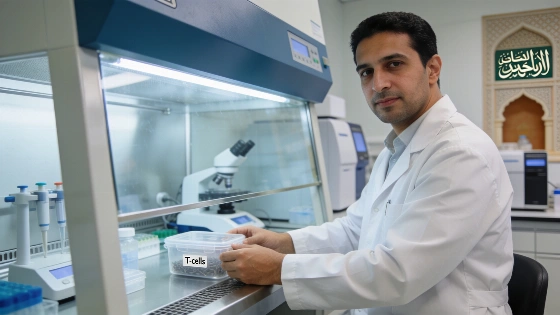
King Faisal Specialist Hospital and Research Centre has started making CAR-T cells inside Saudi Arabia, driving down both the price and wait time for this advanced cancer therapy. In June 2024, the hospital became the first in the Kingdom to produce CAR-T cells locally. The move cut the cost of treatment from SR1.3 million ($346,667) to about SR250,000. Manufacturing time dropped from as long as 28 days to just 14. The hospital treated its first patient with these locally made cells in October 2025. This step marks a major change for regenerative medicine in Saudi Arabia, according to Arab News.
These gains set the tone for the Second Stem Cell Therapy Conference, which Alfaisal University will host in Riyadh on October 23–24, 2026. The event, titled “Stem Cell Therapy: A Paradigm Shift in Treatment and Its Role in Regenerative Medicine,” will bring together researchers, doctors, and biotech leaders. They will break down the latest science and clinical work in cell and gene therapy. The program covers stem cell biology, how regeneration works, cell-based treatments, and the standards for clinical trials on safety and results. This is all laid out in a preview by Sabq.
In October 2025, King Faisal Specialist Hospital and Research Centre announced the treatment of its first patient with a CAR-T product manufactured entirely within Saudi Arabia.
Gene editing, precision medicine, and AI take center stage
Conference sessions will dig into gene therapy, cell engineering, and gene-editing tools like CRISPR. Precision medicine and genomics will get special focus, with experts looking at how genetic data can help pick the right patients and tailor treatments. The agenda also includes tissue engineering, biomaterials, and organoids. Artificial intelligence and bioinformatics will be in the spotlight for their role in analyzing cell and genetic data to push research forward.
Rules and ethics are not being left out. The conference will cover governance, informed consent, and quality checks, along with biobanking, sample storage, and linking clinical data to genetic records. Organizers want to close the gap between lab breakthroughs and real-world treatments. They will tackle technology transfer, intellectual property, and how to ramp up production of cell and gene therapies.
Organizers of the SCGTC 2026 conference have highlighted that practical issues such as scaling up cell and gene therapy manufacturing, technology transfer, intellectual property protection, biobanking, sample storage, informed consent, and quality assurance will be key topics of discussion.
National strategy and institutional leadership
Saudi Arabia's National Biotechnology Strategy, launched by Crown Prince Mohammed bin Salman in January 2024, puts gene therapy and genomics at the top of its list. The plan aims for Saudi Arabia to lead the region by 2030 and to compete globally by 2040. The sector is expected to make up 3 percent of non-oil GDP and add SR130 billion in economic value. Alfaisal University, which ran the first International Stem Cell Therapy Conference in 2023, remains at the center of these efforts. Its scientific committee is led by Prof. Ahmad Al-Askari and Prof. Khalid Mana Al-Qattan, both well-known in Saudi medical research.
Saudi Arabia's quick progress in local cell therapy manufacturing and its push in biotech show a clear drive to change patient care and widen treatment choices. With science, new rules, and strong leadership coming together, the Kingdom is now a real player in the global race for advanced regenerative medicine.