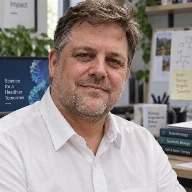
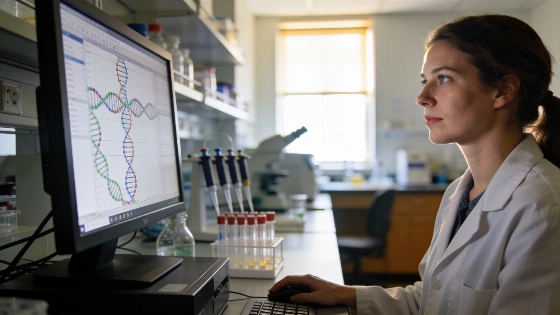
Lab computers at the University of Texas at Arlington are crunching through genomic data, not peering through microscopes. The team, led by Xinlei (Sherry) Wang, is working with $1.96 million in National Eye Institute funding to chase down the molecular regulators that quietly steer eye health or tip it toward disease.
Wang, a statistics and data science professor, is steering a four-year push to create computational tools that can comb through huge genomic datasets and flag the molecular switches that matter most for ocular health. The National Eye Institute’s grant signals support for this cross-disciplinary approach, which blends Bayesian statistics and bioinformatics with clinical and single-cell expertise. Still, NIH Grants & Funding records do not yet show the specific grant number, award date, or official project card for this work in public federal databases.
The National Eye Institute (NEI) is part of the U.S. National Institutes of Health and supports vision research through federal grant programs, but not all awarded projects are immediately reflected in public grant databases.
AI tools break down the eye’s code
Wang’s group, working with Lin Xu at UT Southwestern, is building two AI-driven tools. The first is a scalable algorithm that can handle massive genomic datasets and pick out transcriptional regulators with a central role in eye function and disease. "The algorithm needs to be scalable and run smoothly on very large collections of data," Wang says.
The second tool addresses the eye’s cellular patchwork. Eye tissue mixes many specialized cell types, each with its own job. Bulk analysis blurs these signals, making it tough to see what individual regulators do. Wang’s answer is a deconvolution tool that separates mixed signals computationally, showing how regulators act in specific cell types—without the steep cost of single-cell experiments for every regulator.
Turning data into targets
By spotlighting the most influential regulators at both tissue and cell-type levels, these tools could speed up the search for new therapies. "Together, these two tools will let us study the eye at two levels: the overall tissue level and the individual cell-type level within it," Wang explains. The goal is to move diagnostics and targeted treatments forward, aiming to preserve or restore vision.
The NIH is recognized as the world’s largest public funder of biomedical research, awarding grants and contracts to support scientific innovation across the United States. However, current NIH search results do not link this general funding information to the specific UTA project on eye disease regulators.
Wang’s track record includes using AI and advanced statistics to find hidden biological patterns in complex diseases. Her ongoing partnership with UTA engineering professor Junzhou Huang, which combines AI and Bayesian learning to speed up drug design, highlights the university’s push for computational innovation in biomedical research.
UTA’s research push and the wider field
The University of Texas at Arlington, with more than 42,700 students and a Carnegie R-1 research label, is staking its claim in data-driven biomedical science. Dean Morteza Khaledi calls the grant "an outstanding achievement and a testament to the strength, significance and growing impact of Dr. Wang's interdisciplinary research program."
AI and single-cell technologies are changing how researchers tackle complex diseases. A recent study mapped Alzheimer’s at single-cell resolution, opening new paths for diagnosis and therapy.
The National Eye Institute’s support puts Wang’s team in position to deliver tools that could shift how scientists study eye disease at the molecular level. The project at UT Arlington stands as a concrete example of targeted investment in interdisciplinary science driving the move from data to medicine. The last word rests with the operational fact: the tools are in development, and the funding is in place.