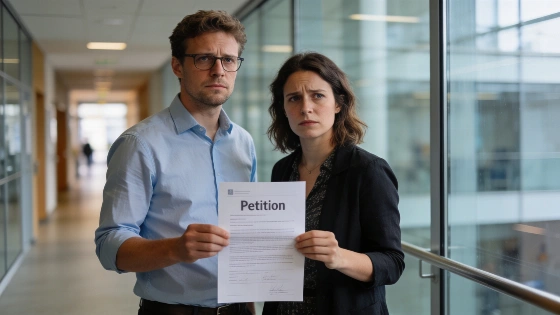
Forty-two researchers at Wageningen University & Research want the Executive Board to rethink its public support for the European Union’s new gene editing rules for plants. They handed in a petition. Their main complaint: the university spoke for everyone without asking or showing the range of views among its own experts.
The dispute started with WUR’s official response to a European Commission consultation on new rules for plants made with new genomic techniques (NGTs), including gene editing. In that response, WUR said it "welcomes" the regulation and listed recommendations for how to put it in place. The petitioners say this makes it look like everyone at WUR agrees. That’s not true. Views on the science, ethics, and social impact of NGTs are all over the map.
The EU formally adopted Regulation (EU) 2026/1388 on gene-edited plants on June 17, 2026, marking a major shift after more than two decades of debate.
Academic freedom or one voice?
Benedikt Haug, a plant researcher who signed the petition, says the fight isn’t about the EU regulation itself. “For us, it’s not about whether you’re for or against new genomic techniques. Opinions on this vary widely within WUR, and that is precisely our strength,” Haug said. Some WUR scientists work on developing and using NGTs. Others study the ecological, economic, legal, or ethical sides. They often disagree. The petitioners want every researcher and group to keep the right to speak for themselves. They don’t want to be forced under one official view.
They draw a line. When an issue directly affects higher education or how the university works—like the Gaza situation—a single university position might make sense. But for ongoing scientific debates, they say WUR should help research and open discussion, not act as a referee or declare consensus.
Push for open process
The group wants more than just a retraction. They want to know how WUR drafts and approves official statements. They ask the board to spell out the rules for making university policy statements and to start a campus-wide talk about when WUR should speak as one. They say technical advice or recommendations should be linked to the actual researchers or groups, not labeled as the view of the whole university.
The new EU regulatory system distinguishes between NGT-1 plants, which have limited genetic changes comparable to traditional breeding, and NGT-2 plants, which involve more complex modifications and remain subject to strict GMO rules. For NGT-1, changes are limited to substitutions or insertions of no more than 20 nucleotides.
The Executive Board says it got the petition and will check the facts. So far, there’s no public sign that the board has changed its position or pulled back its statement. Most news coverage focuses on the new EU law, not on WUR’s internal fight. This debate at WUR is part of a bigger question. How should universities balance open science with speaking as one institution? The same issue has come up in other fields, like gene editing therapies. For example, the real-world impact of gene editing was shown in the case of a Berlin teen treated with Casgevy.
WUR’s internal fight shows how tricky it is for research institutions to speak for their communities. A university’s strength is its mix of expertise and the freedom to question the mainstream. When official statements flatten that mix, both science and the institution lose credibility. WUR faces a real test now. Will it open up debate and show how decisions are made? Or will process and paperwork drown out the voices that make academic life strong?