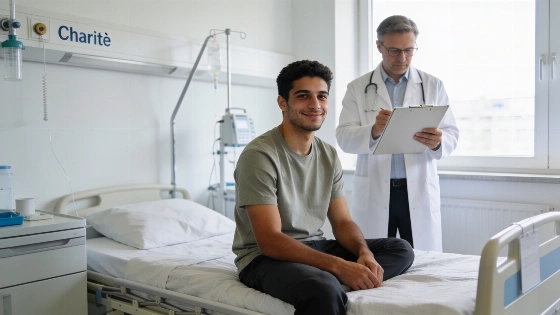
Mohammad, 19, spent years tied to blood transfusions. That changed in Berlin. He became the first person in Germany with beta-thalassaemia to get Casgevy, a CRISPR gene-editing therapy, at Charité hospital. This marks a real shift for gene-editing medicine in the country.
During the CRISPR therapy at Charité, Mohammad received more than 900 million genetically modified cells after preparatory chemotherapy.
Gene-editing opens a new door
Stem cell transplants are the standard cure but are usually only for patients under 14. Mohammad was too old for this. In May 2026, he became the first in Germany to get Exagamglogene Autotemcel, a CRISPR-based treatment, at Charité. The process takes about a year. The result is clear: Mohammad no longer needs transfusions. His immune system has bounced back. Charité says he is doing very well.
The technology behind this comes from Nobel winners Emmanuelle Charpentier and Jennifer Doudna. CRISPR lets doctors edit the faulty gene with precision. The treatment is complex and resource-heavy, so only a few patients will get it for now. But for those who do, the impact is huge. According to a detailed report by RND, Charité is the first certified center in Germany to offer this therapy. Statutory health insurance covers the cost if the clinic gives special approval.
Barriers and questions remain
The full course of Casgevy therapy at Charité is designed to last about 12 months, and after the procedure, Mohammad's immune system has already recovered with his condition described as very good.
Gene-editing is now part of German clinical care for inherited blood disorders. A young adult who once had no curative options is now free from transfusions. That is a real change for rare disease medicine. But the bigger test is whether this kind of therapy can reach more people. For now, Berlin shows what CRISPR can do. The promise is real, but access is still limited.