Residents aged 65 or older make up 42.0% of Gochang’s population, compared with 22.2% nationally. A survey of the county’s oldest residents found deep roots in their villages, though physical difficulties often kept them from socializing.
The survey covered 51 people aged 90 to 102 who could take part in in-person interviews from March 30 through April 10. Their average age was 95.2, and six were at least 100. On average, participants had lived in the same village for 68.5 years. They rated their attachment to place at 4.07 out of 5. Some 62.5% said they often socialized with neighbors and acquaintances outside their families. Another 61.7% attended regular gatherings. The findings were presented by the Chonnam National University research team.
Getting out remains a hurdle.
Although 45% could go out alone, 81.3% of those who did not socialize with neighbors cited physical difficulties. Participants’ exercise and physical activity score averaged 1.4 out of 3, compared with 3.5 out of 4 for chronic disease management. Seventy-two percent lived alone, while 86% lived in their own homes. Participants had an average of 5.2 surviving children.
Village halls as a care hub
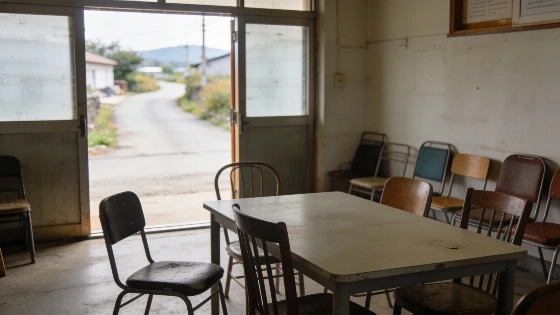
Hospitals were the most common recent destination outside participants’ homes, cited by 74.5%. Restaurants followed at 51.1%, and village halls at 48.9%. Village hall and village gatherings were the most common organized activities, with 11 participants attending them.
Researchers recommend expanding community-based integrated care in rural areas, with village halls serving as hubs for health and physical activity programs. They also propose transport and accompaniment for outings. For people whose physical function has declined, they suggest home-visit social programs. The proposals would bring care closer to local communities.
Han Jae-young, director of the Geriatric Medicine Center at Chonnam National University and a professor in the hospital’s Department of Rehabilitation Medicine, said healthy longevity should be considered alongside physical health. He also pointed to long-standing community ties, neighbor interactions and the conditions for everyday activity. Han said the survey could prompt consideration of integrated care that supports physical function and social relationships together.
Walking ability and genomic clues
At the 18th Healthy Longevity Forum, Professor Kim Jeong-su of Chosun University will present “Brain Health Revealed by the Genomes of Walking Centenarians.” The analysis assessed walking ability using the FAC, or Functional Ambulation Categories, scale. Researchers identified 42 candidate genes. Of those, 15 were expressed specifically in the brain, with many found in the cerebellum and cerebral cortex.
The results point to possible involvement of brain function and neural regulation in maintaining walking ability, alongside muscles and physical function. They suggest a potential brain-muscle neural regulatory network. The reported candidate-gene findings do not by themselves establish a causal mechanism.
Dr. Yoon Sa-jung of Johns Hopkins University will discuss “Designing Healthier Aging with Digital Twins and Medical AI.” The forum’s modeling focus differs from experimental work on how physical conditions shape cells. One example is a microgravity cell study using a random positioning machine to simulate microgravity for human cells.
Rural aging in national figures
National statistics scheduled for presentation at the forum put Korea’s population aged 100 or older at 8,604 in 2025, up 54% from five years earlier. Jeonnam had the highest provincial and metropolitan rate, at 31.8 per 100,000 people, against a national average of 17.3. Goheung County recorded the highest city- or county-level figure, at 91.8 per 100,000. Bae Sang-mu, a team leader at the Honam Regional Office of the National Data Agency, presented the figures.
Gochang is a rapidly aging rural county: residents aged 65 and older make up 42.0% of its population, compared with 22.2% nationally. Across the country, 38.0% of the 6.507 million households headed by someone aged 65 or older were one-person households, according to 2026 elderly statistics published on October 1. South Korea counted 8.24 million one-person households in 2025, or 36.6% of all ordinary households. Nearly 30% of people living alone were aged 65 or older. The Korea Herald reported on concerns raised by the National Assembly about social isolation and care gaps for older people living alone.
The Ministry of Health and Welfare has identified 3.208 million older people, or 28.5% of the older population, as a potential target group for integrated care. The most vulnerable core group comprises 983,000 people, or 8.7%. The ministry’s regional needs analysis uses data to identify groups requiring tailored support.
Chonnam National University Hospital, the Korea Centenarian Research Group and Chonnam National University’s Institute of Aging Science will hold the forum at 2 p.m. on October 16 at Deokjae Hall at Chonnam National University Medical School. Its program includes research on nutrition. It also features medical AI presentations and national statistics.